The Ultimate Adam's Peak Guide for 2026: Climbing Sri Lanka's Most Sacred Mountain

This post contains affiliate links, which means I may earn a commission if you make a booking, at no extra cost to you.

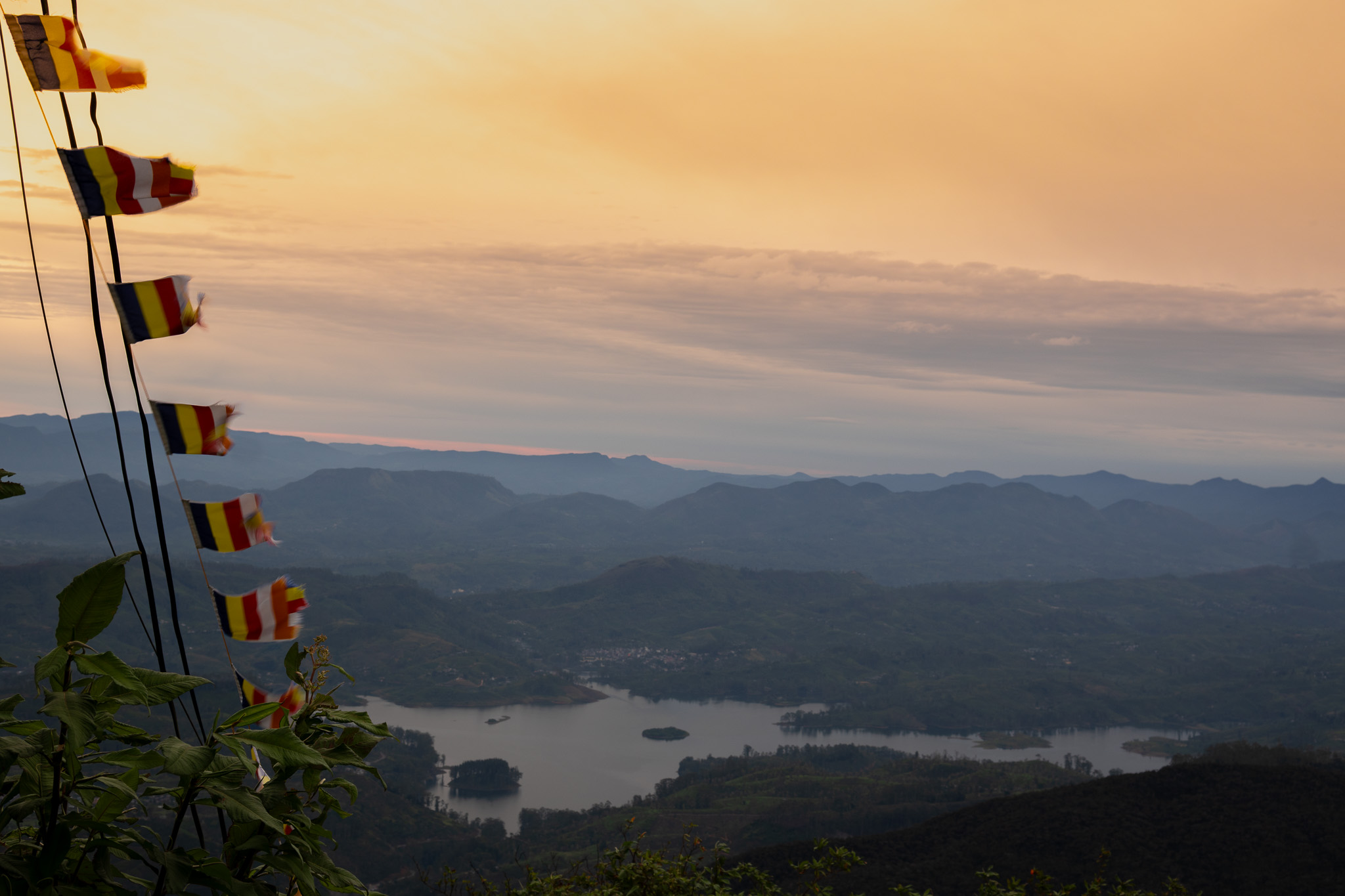
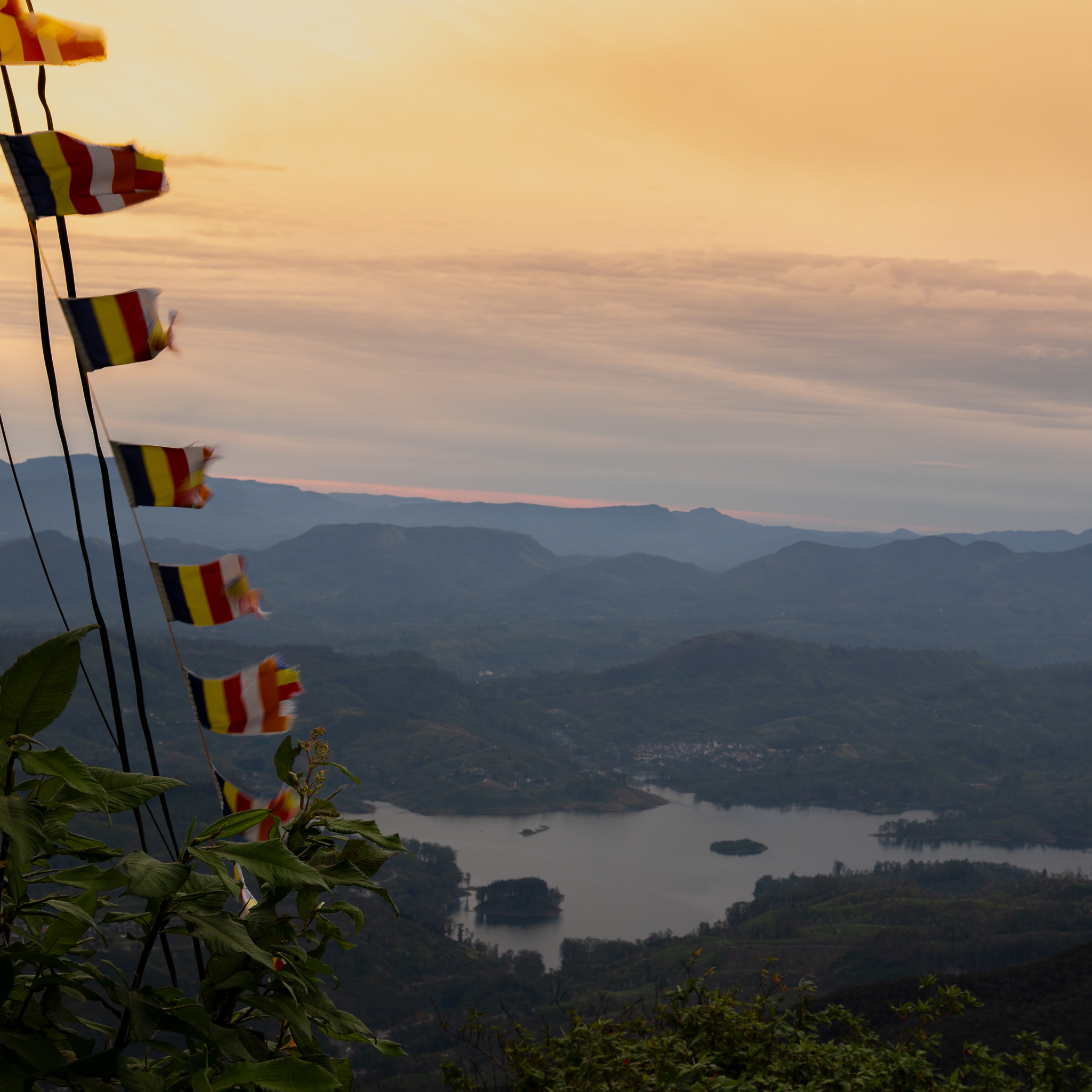
Sunrise view from Adam's Peak (Sri Pada) Sri Lanka with Buddhist prayer flags over misty mountain valleys and reservoir.

Imagine this: It’s 5am, you’re stood on top of a spiritual mountain surrounded by so many people that just completed the climb of a lifetime watching the sun rise over the incredible landscapes ahead. 

Standing at 2,243 meters (7,359ft), Adam’s Peak is not a casual hike, it’s a gruelling step-by-step climb of almost 6,000 steps. It’s emotionally electric and one of the most culturally profound experiences you can have in Sri Lanka. Climbing Adam’s Peak isn’t just for the view, although it is incredible, it’s to witness centuries old convergence of human faith. 

After completing this outstanding climb, I’m here to share everything you need to know to conquer Adam’s Peak yourself. 

One Mountain, Four Faiths: The History

Sri Lanka is predominantly a Buddhist country, however, the peak is unique in that it doesn’t just belong to one faith or culture. At the summit is a sacred rock formation with an imprinted footprint. For centuries, it has drawn millions of devotees from four major religions for different reasons: 

  • Buddhists call the mountain Sri Pada (the sacred footprint) and they believe that it’s the footprint of the Buddha during his third and last visit to Sri Lanka. 
  • Hindus call the site Shiva Padam (Shiva’s foot) and they believe the footprint was left by Lord Shiva. 
  • Muslims call it Adam’s Peak as they believe it to be the spot where Prophet Adam first stepped on Earth when he was expelled from Paradise
  • Christians believe it the footprint comes from St. Thomas who travelled South Asia in the 1st century to share Christianity and he left his footprint on the summit.

As for the name, early medieval Muslim merchants gave it the name “Adam’s Peak” after their beliefs. European colonial powers and Western cartographers later adopted the name to give the summit the universal English name of “Adam’s Peak” for the West. 

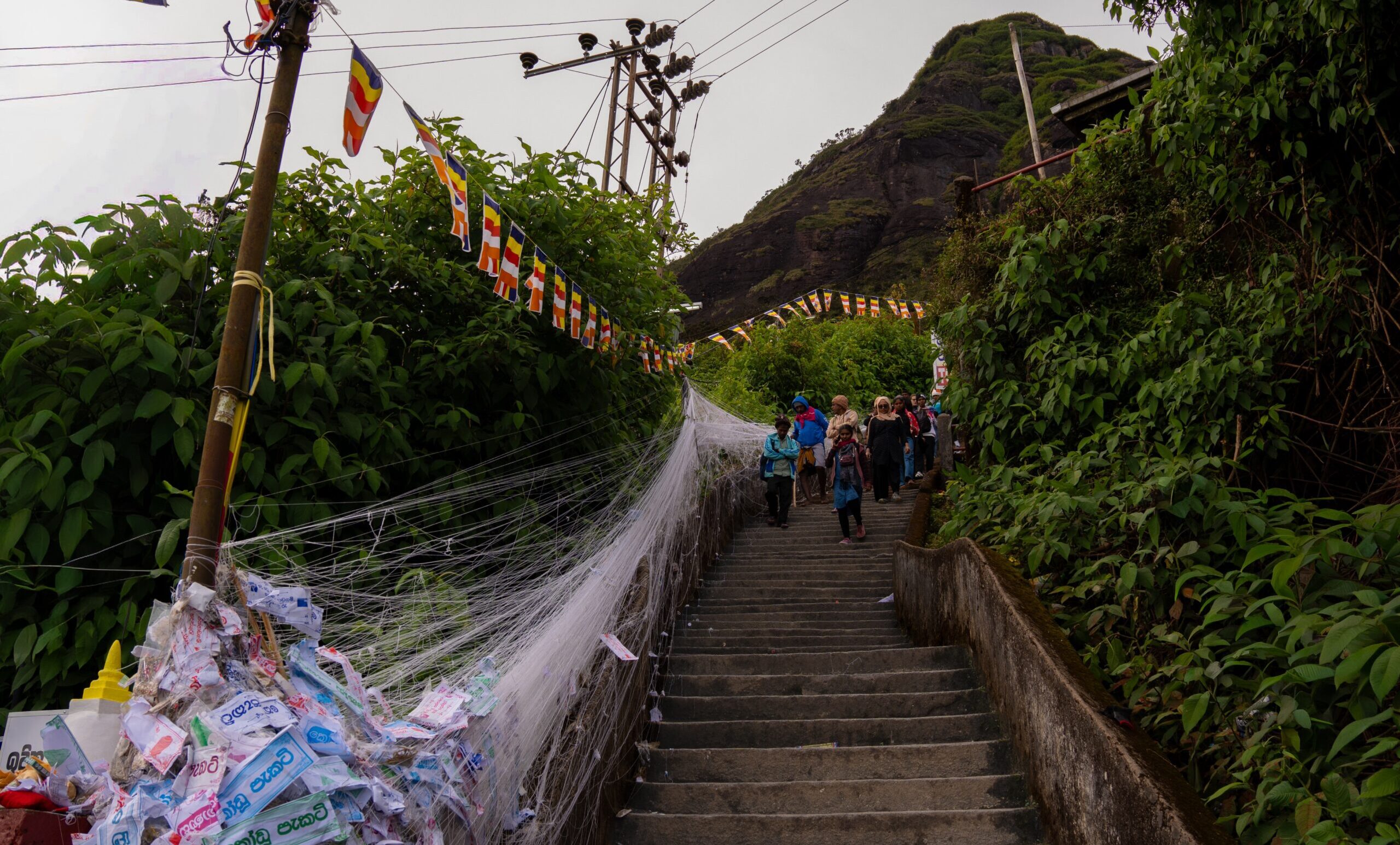
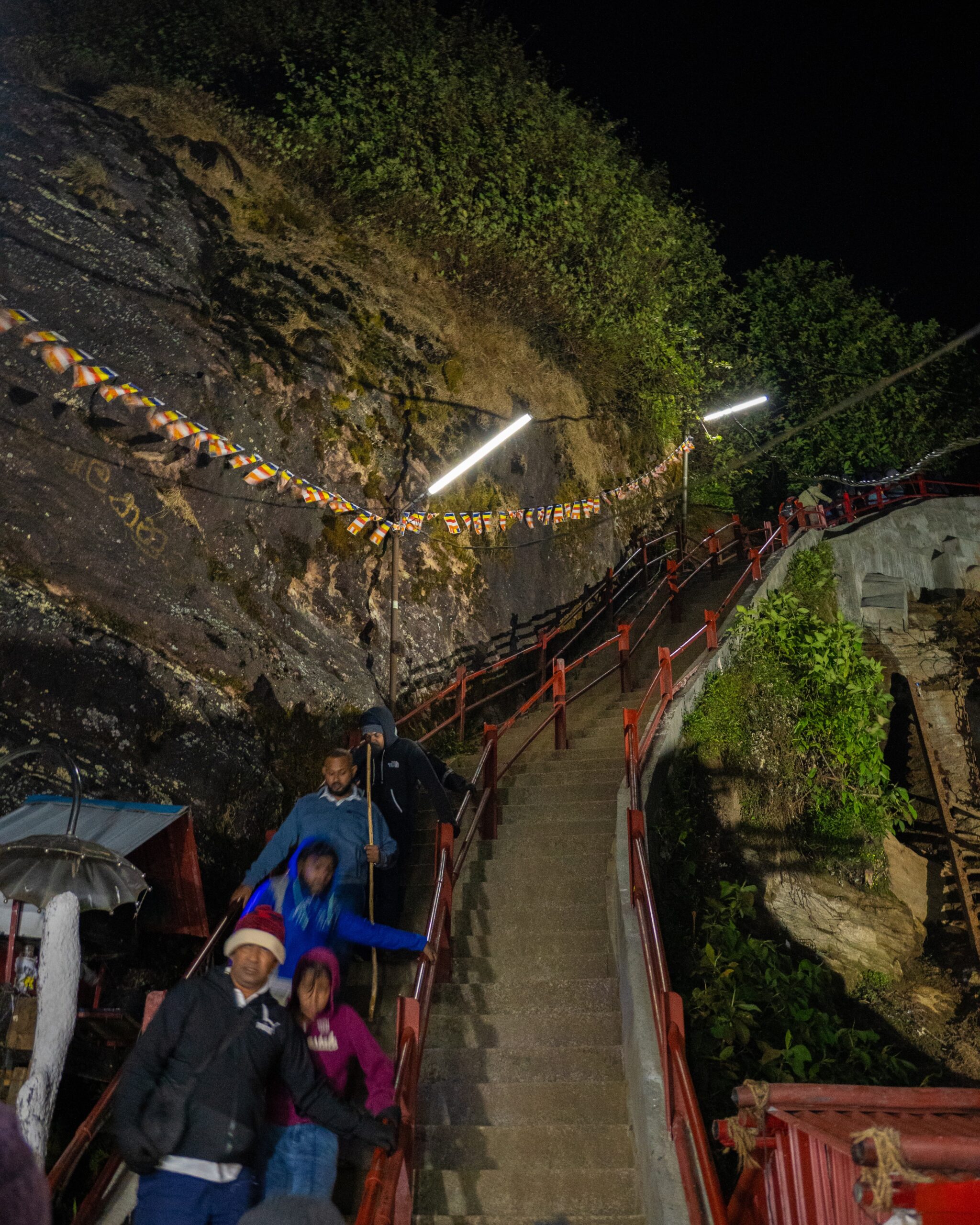
A set of stairs running up to the mountain of Sri Pada (Adam's Peak) in Sri Lanka with buddhism flags along the edge
A spot on the trail called Geththam Pana where first-time Buddhist pilgrims buy a novice packet and let the thread follow them up the mountain. According to Buddhist legend, when the Buddha climbed the mountain his robe was caught on a tree and this was the spot he stopped to mend it. The thread represents a continuous way of enlightenment.

Getting There: The Logistics

There are six main ways to climb Adam’s Peak. However, some routes like Ratnapura or Kuruwita wind through dense, rugged jungle and can take up to ten hours of hiking to reach the peak. 

For this guide, I’ll share everything based on the most popular route, known as the Hatton Route, which starts at the village of Nallathanniya (known also as Dalhousie and commonly written on bus signs). It is the most well-maintained pilgrimage route and it’s the one I chose.

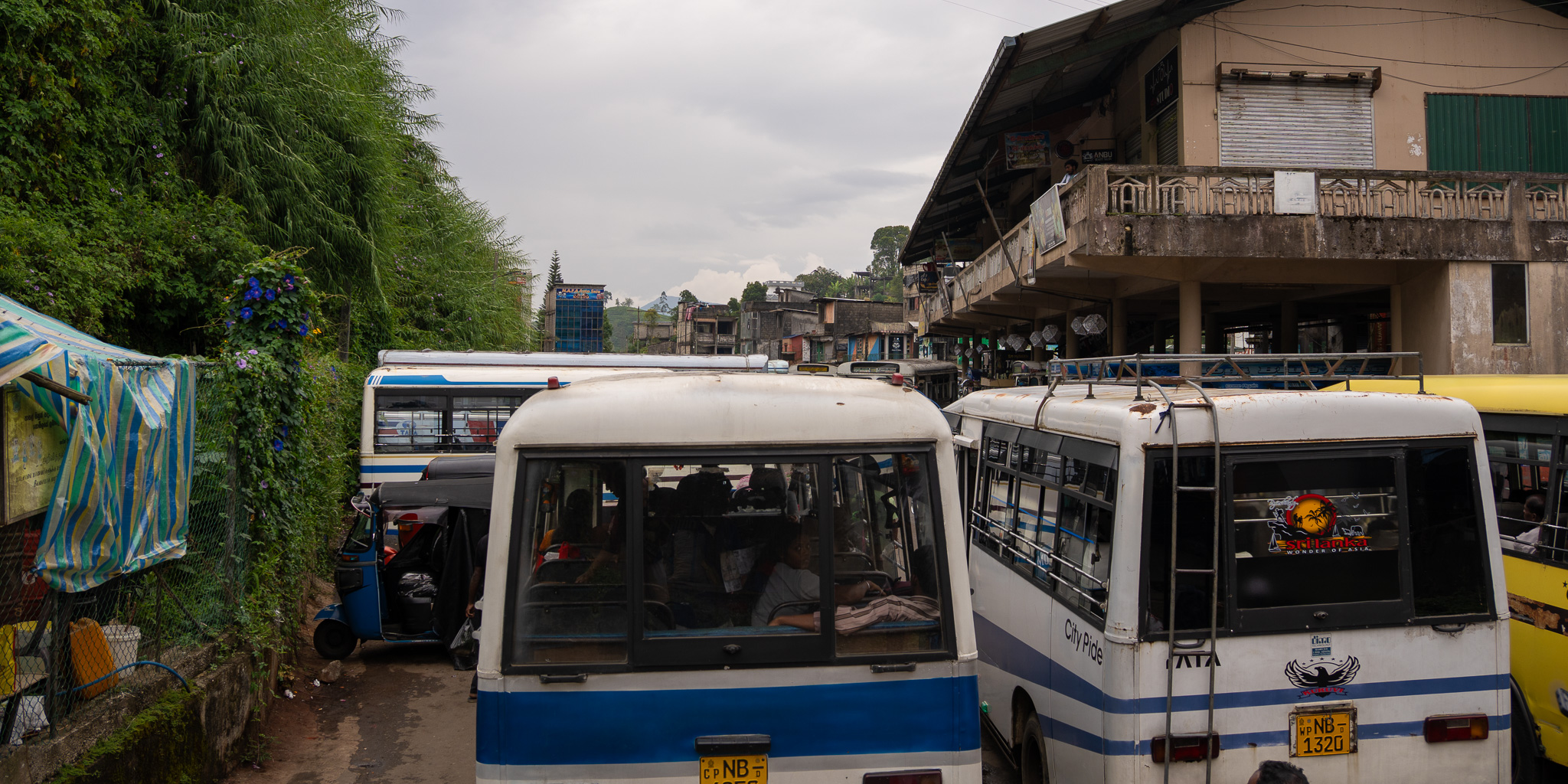
Minibuses parked up at Hatton bus station, along the journey to Adam's Peak, Sri Lanka
Hatton Bus Stand

To get to the village for your pre-climb stay, it’s a two part journey: 

Step 1: Head to Hatton – The closest major transport hub.

  • By Train: Hatton sits on the famously scenic Kandy-to-Ella railway line. The train is well-priced, reliable and offers incredible views of rolling tea estates. Take the train if you’re coming directly from Kandy, Ella or Colombo. 
  • By Bus: If you’re coming from elsewhere then plenty of local buses run to Hatton daily. They’re affordable but can be busy and uncomfortable. I took the bus from Nuwara Eliya which costs 280LKR ($0.84) for a two hour journey. 

Important Note: At the time of my visit, the railway line was still undergoing repairs from the 2025 cyclone. Be sure to check live updates on official sites before trying to take a train.

Step 2: From Hatton to Dalhousie – The base.

The mountain roads from Hatton are extremely narrow and winding as they head through the tea estates. The journey takes about an hour and a half. There’s two main options:

  • Local Bus (budget option): Local buses run regularly from the bus station – ours cost only 200LKR ($0.60) which is great for the budget.
  • Tuk-Tuk (direct option): If you’re after a direct, more comfortable ride then there are plenty of tuk-tuks ready in Hatton to take people to Dalhousie. They will cost anything from 2,500 to 4,000LKR ($7.50-$11.95). Drivers will often happily stop for photos along the gorgeous roads too.
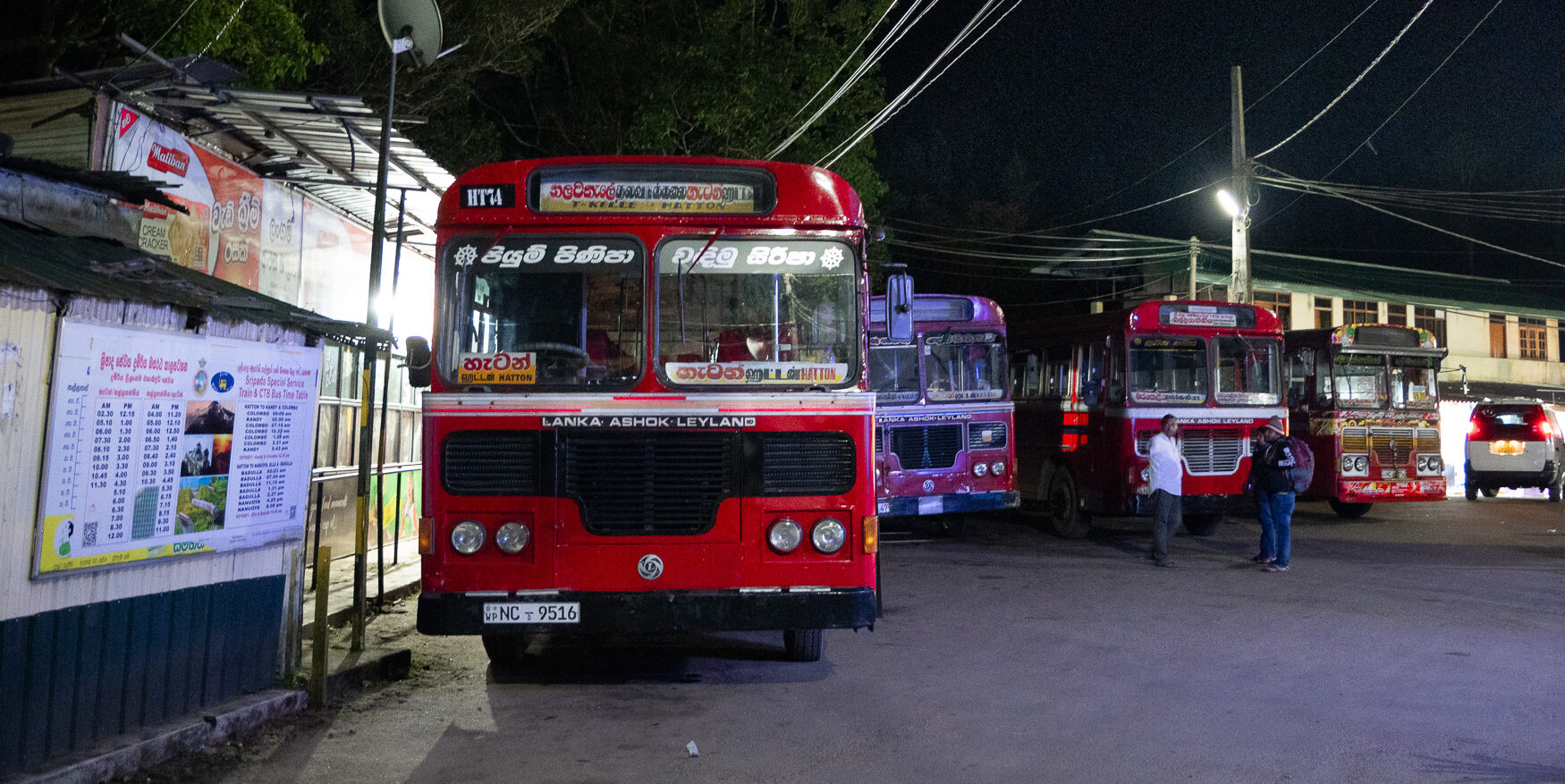
Red local Sri Lanka buses parked near Adam's Peak at night time
Buses to Hatton parked up in early hours of the morning ready to set off

Insider Warning: I took the bus because I’m budget-conscious, however, some of the bus drivers drive like crazy on these roads. There was one too many times that I thought the bus was likely to come off the mountain roads. Either be prepared for a seriously high heart rate or take a tuk-tuk!!

Where to Stay

The majority of people will start the climb in the early hours of the morning, so chances are you’ll want a place to rest before heading out. You’ll need to book a room in Nallathanniya (Dalhousie). The town is small and runs along a single main road, with the majority of properties being within a ten-minute walk from the official start point. Booking.com has plenty hotel, homestay and guesthouse options. 

The room here, is purely for rest and baggage storage, so there’s no need for anything fancy (unless you want to, of course). As long as it has hot water and is fairly close to the trailhead, then you’re good to go. Be sure to filter for WiFi if you need it as cell-service can be unreliable. You can skip the air-conditioning here as the region is much cooler than other parts of Sri Lanka, especially at night.

I stayed at Daffodils Inn – a lovely little homestay ran by a kind family. A simple double room with an en-suite and balcony facing the mountains, with hot water and WiFi too.

Pre-Climb Preparations

Before you catch an early night ready for the big climb to come, make sure you’re fuelled up – a traditional curry and rice will do the job. Our homestay family cooked us a gorgeous rice and curry with desert but there’s plenty of restaurants to grab dinner at.

Be sure to pre-pack your bag with everything you might need and have everything ready to go for as soon as that early morning alarm goes off!

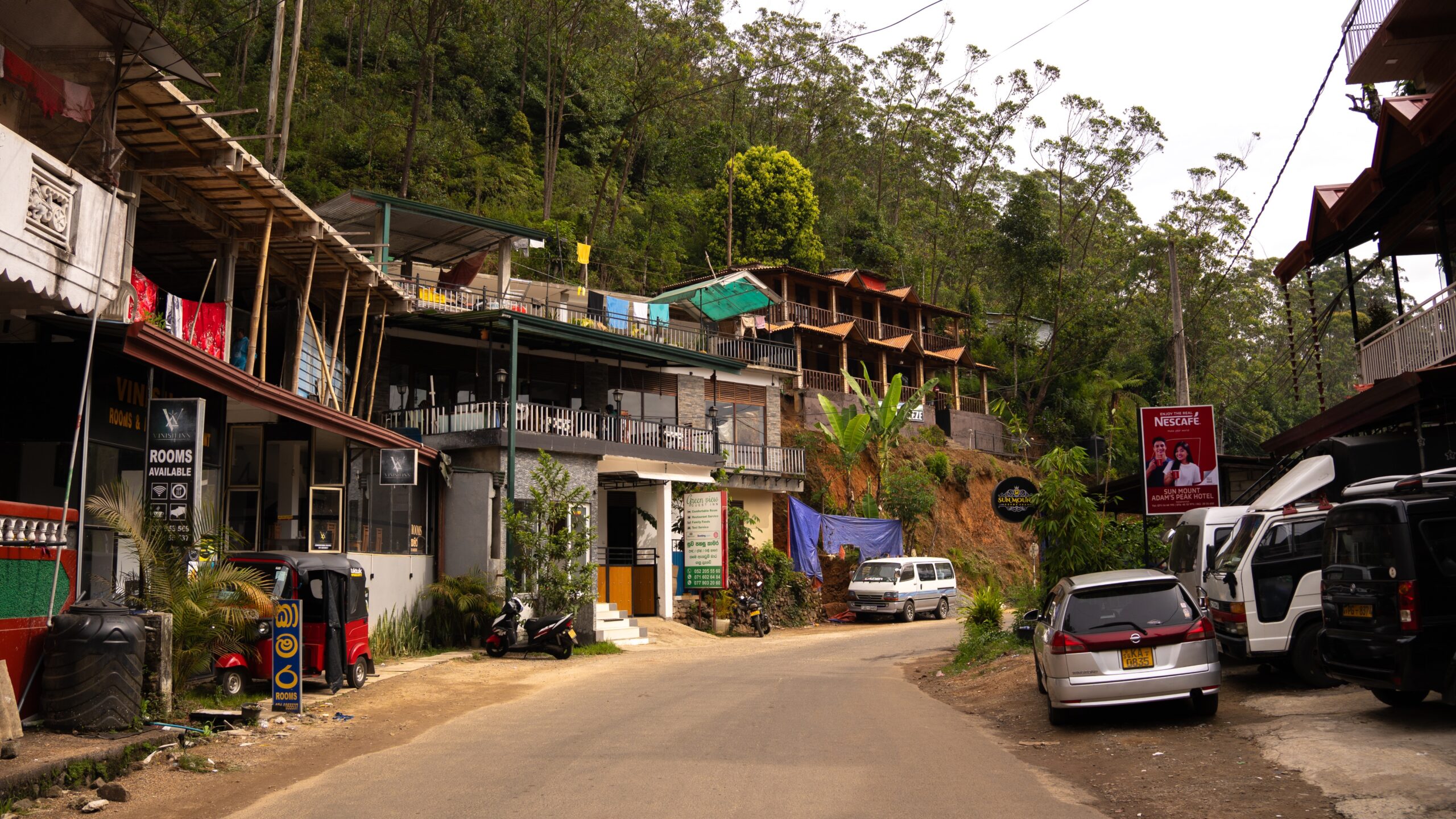
A main road near the Hatton Route entrance of Adam's Peak (Sri Pada) with shops, restaurants and hotels along the edge.
The main road that runs through the town which is lined with shops, restaurants and hotels

The Difficulty: The Reality Check

Straight to the point: this hike is a brutal, relentless test of endurance. 

I love hiking but this isn’t anything like a normal dirt trail with switchbacks and great views. It’s 6,000 uneven, vertical stone steps carved into a mountain face in the dark.

It can take anything from 3 to 5 hours to reach the summit and another 2 to 3 hours for the descent. 

As someone who considers themself to be physically fit, I found the climb tricky at points. Not on a physical level but more in regards to pushing myself through. I had slept for about 3 hours beforehand and travelled a fair distance by public bus the day before so was already exhausted. 

You don’t need to do any sort of specific preparations for the climb but it is important that you’re physically fit. I wouldn’t recommend the climb to anyone who has any sort of cardiovascular, muscular or joint issues.  

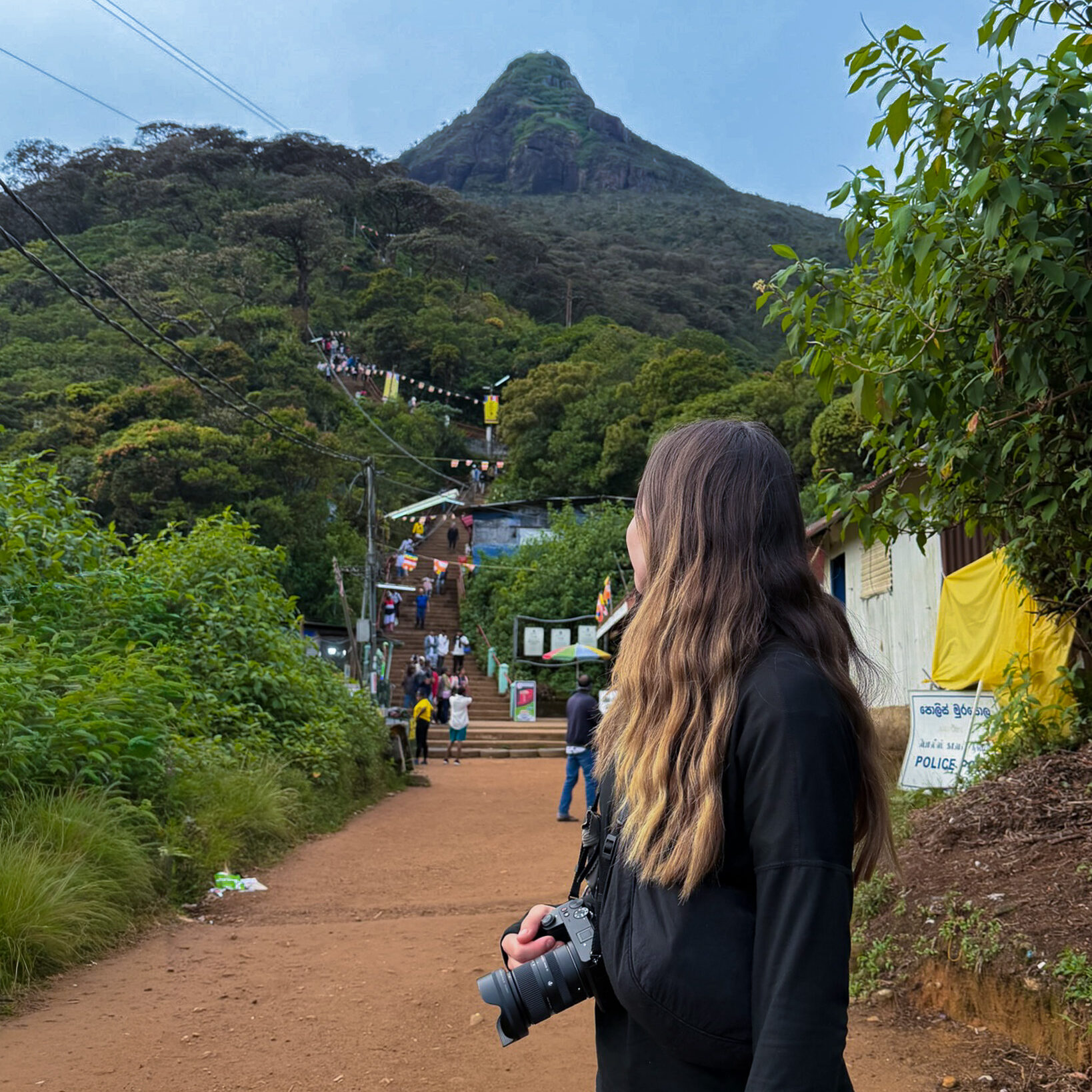
A women stood on a flat stretch of ground looking up at Adam's Peak (Sri Pada) in Sri Lanka, after a morning climb.
The stunning sight of what you've just achieved after the descent in early morning hours

The Climb: What to Expect

Here is exactly how the journey might look: 


2am: Wake-Up and Leave 

Fight through the tiredness, head out and look up. During the pilgrimage season, the entire mountain is lit up by a spectacular, glowing string of white lights that follows the path all the way to the top. It’s a beautifully cruel reminder of how far you’ve got to go. Grab a chai and a snack from one of the stalls before the entrance to get you started.

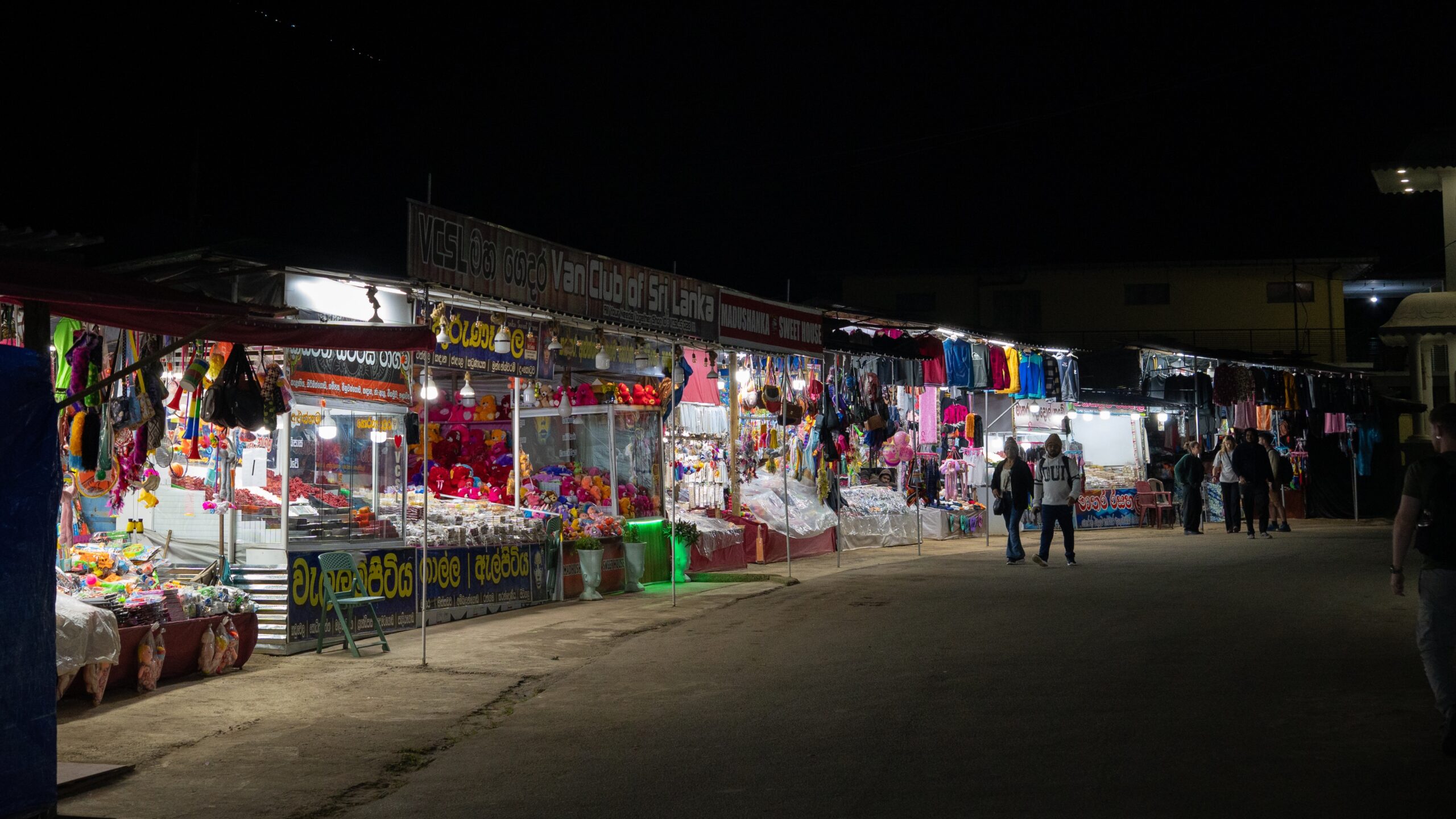
A night scene near Adam's Peak with open stalls selling toys, clothes, sweets and more
The row of stalls in the town before the start of the climb that open through the night selling everything from snacks to toys to warm layers

2.30am: Start the Climb

The first third of the climb is subtle and a little overwhelming for this time in the morning. It’s filled with small, colourful shrines, locals and brightly lit shops selling everything from sweets to chai to fairground toys. 

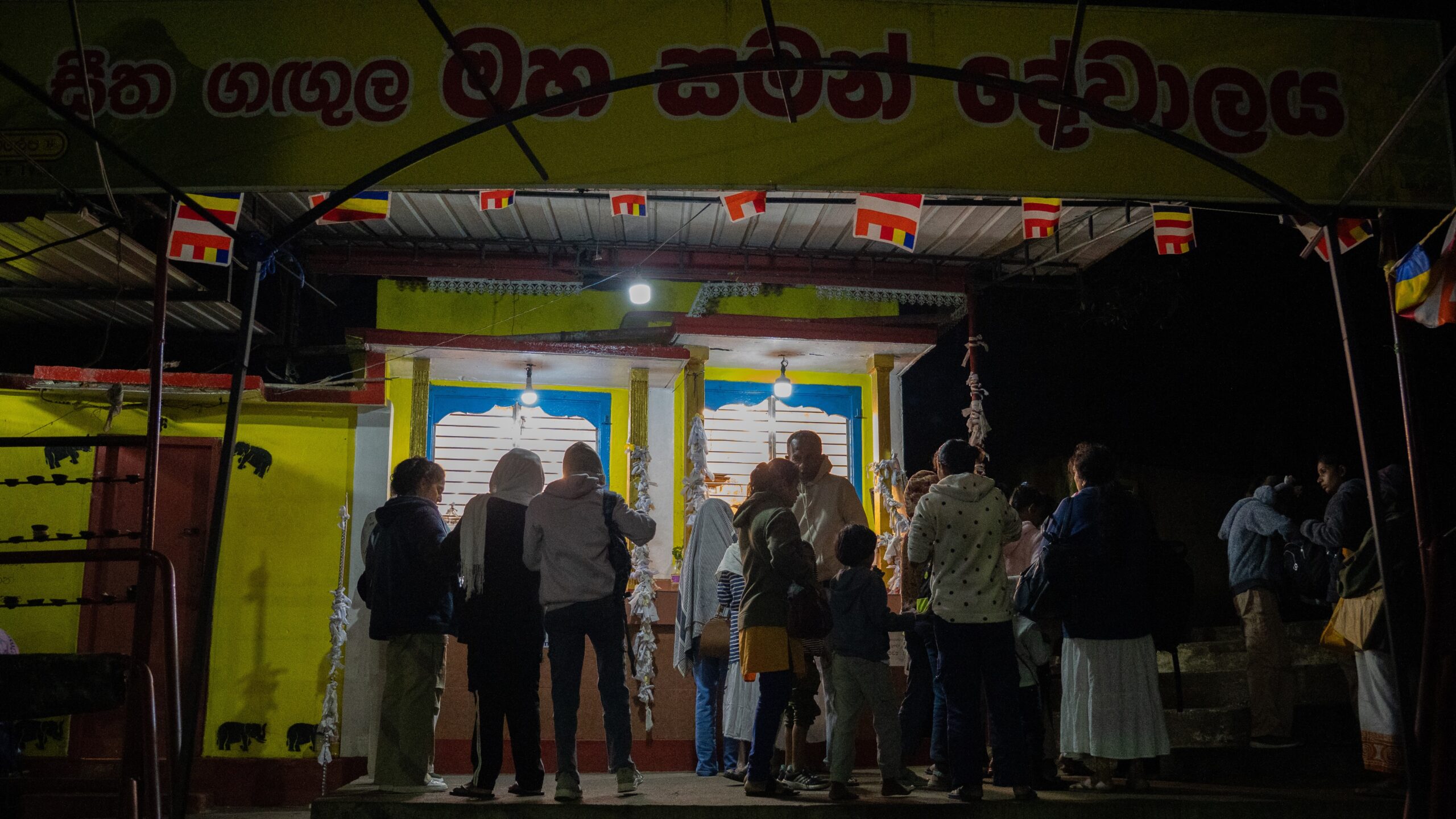
Be Aware: There are monks along the first stretch of the trail asking for you to sign in on a book. I was unsure what it was and assumed it was a book to track who was on the trail as it took details such as name, country, contact number, date and time. Interestingly however, there was only the names of foreigners in these books. They then give you a thread bracelet with a blessing and ask for a donation to the trail or the temple. This then happened again and the same on the descent. Whilst I’m sure it’s not a scam in the traditional sense, you don’t actually have to give them anything if you don’t want to and are welcome to respectfully smile and continue past.

A buddhist donation box on the route up Adam's Peak in Sri Lanka
A buddhist shrine and donation area for those the Buddhist pilgrims

3.30am: The Middle

Once you make it past the first section, the incline really starts becoming steeper and the steps become irregular. During this middle section there are a few restaurant stalls and shops with snacks, water and chai if you need anything or want a rest. 

4.30am: Final Push

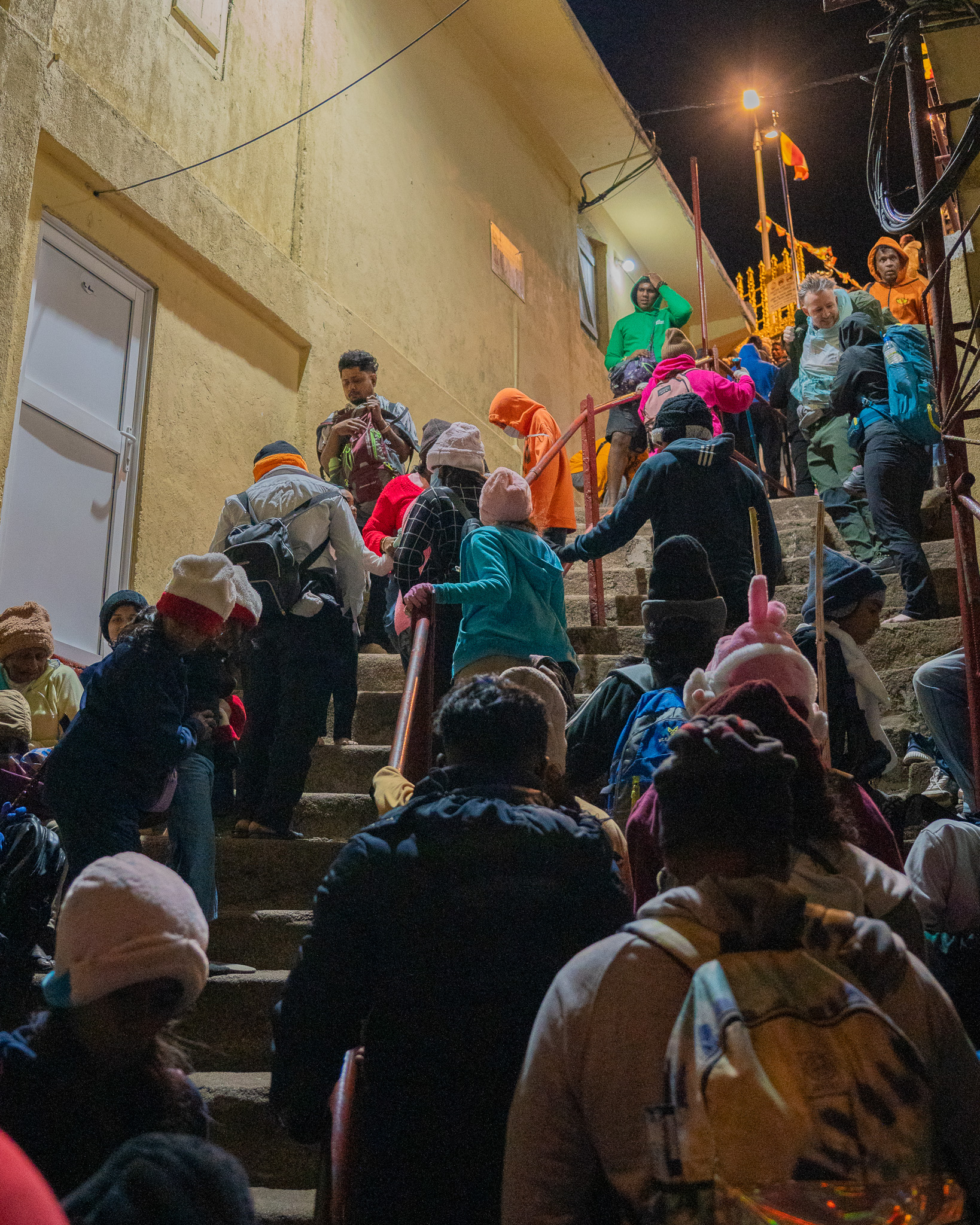
This last section of the trail is where the stairways get narrow and even steeper. The surroundings become more open so the wind and cold air are more noticeable. It’s tough but you’re close!

A set of steep, narrow stairs heading up the side of a mountain - Sri Pada (Adam's Peak) in Sri Lanka.
The last push before the top, it's a long run of narrow and steep steps
The steps right at the top where everyone stops to remove their shoes before entering the sacred mountain top

5.30am: The Summit

You’ve made it! Take some time to explore everything that sits on the top of the peak and prepare to watch the sun rise over the mountains in the distance around 6am. Don’t rush to get down, really take it in and experience it with the locals.

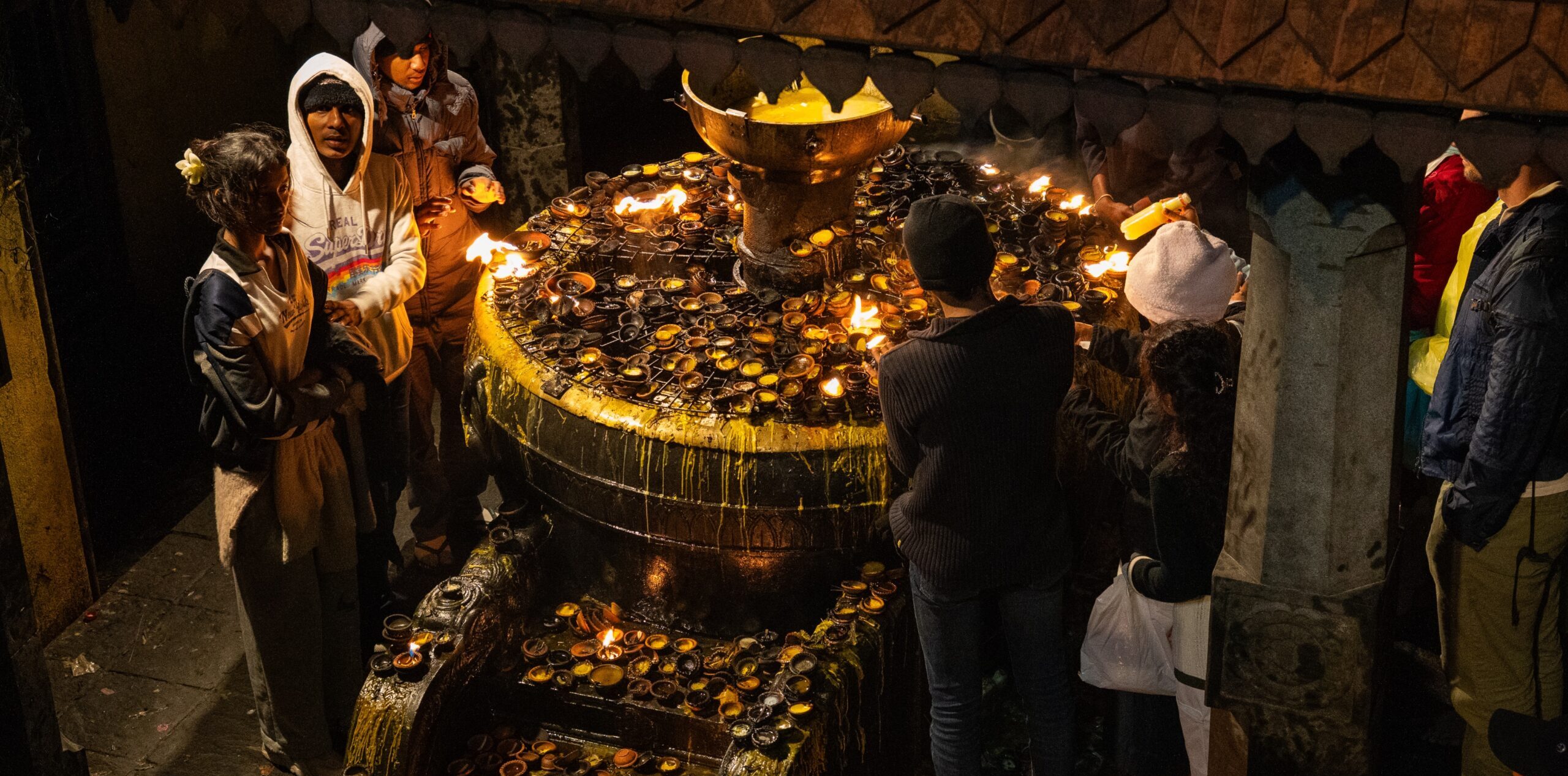
People lighting candles for wishes and devotion on top of Adam's Peak (Sri Pada) in Sri Lanka.
Pilgrims lighting candles to show their devotion to their faith or for personal reasons

7am: The Descent

Once you’re ready to take on the descent, head off. Take it steady, and take in the, now visible, views as climb down. 

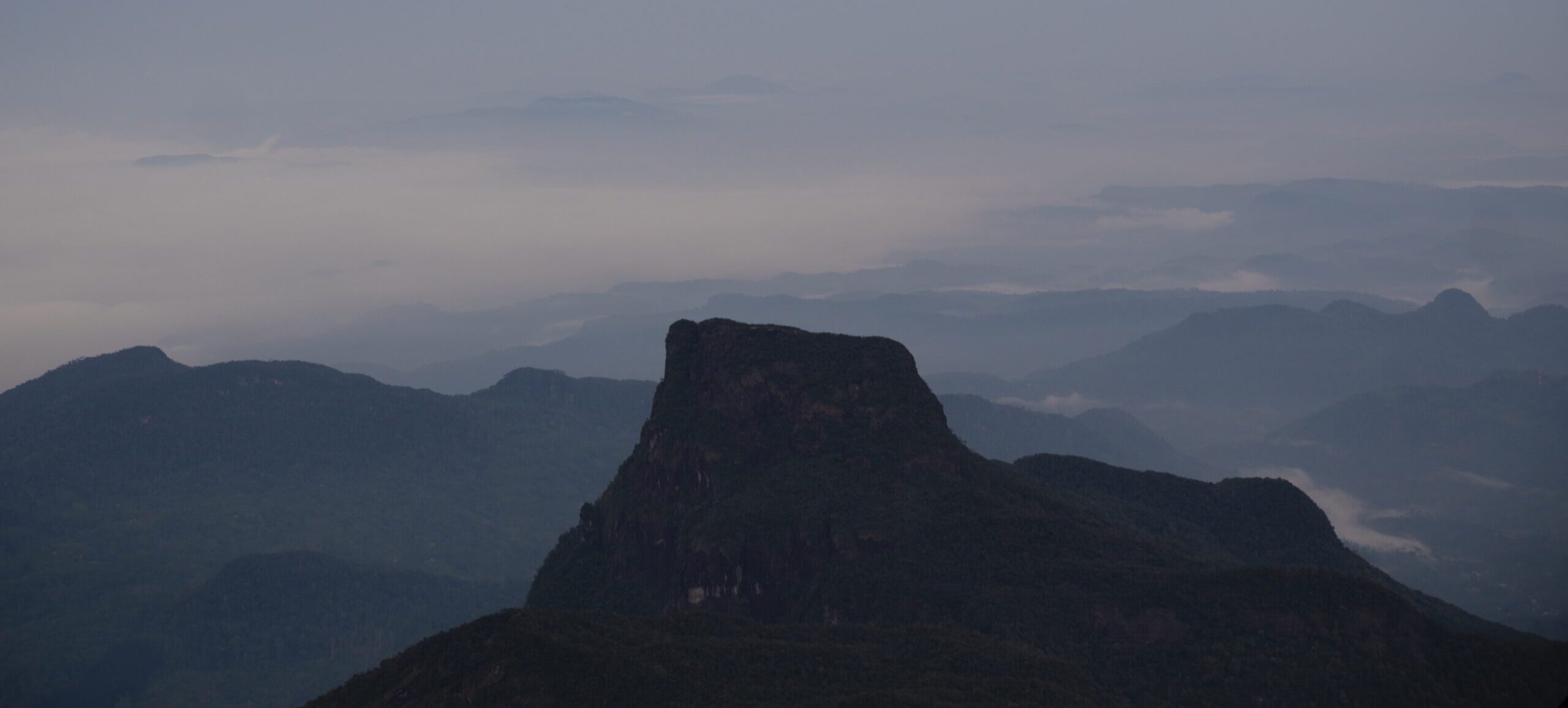
Misty mountain views from the top of Adam's Peak (Sri Pada) in Sri Lanka
Views over the misty mountains as the sun starts to rise in the distance before making the mountain descent

Essential Travel Tips

Thick Socks: As Adam’s Peak is an active holy site, it’s required to remove shoes at the top. From experience, standing on cold stone in thin socks at 5.30am is incredible uncomfortable. Take an extra pair of socks or wear thick socks to combat chilly toes. 

Footwear: You’ll likely see Sri Lankans climbing in their sliders or flip flops and whilst you can do this, I’d highly recommend well-worn running or hiking trainers for stability. 

Layered Clothing: It’s cold when you first start in the early hours of the morning but as you climb your body will warm up. As you reach higher up, you’ll likely be cold again. Make sure to take clothes that layer well and are easy to take on and off.

A group of people watching the sun rise over mountains with photos capturing it
Everyone at the top waiting for the sunrise in their coats, hats and gloves to fight the bitter winds

Best Time to Go: The official pilgrimage season runs from December’s full moon through to May’s full moon. This is a perfect time to visit as the paths are well-lit, the stalls are all open and it feels truly alive. Avoid weekends, public holidays and full moons at all costs. You’ll likely get stuck in a human traffic jam and might not catch the sunrise on the top.

Temple Modesty: As the summit is a highly sacred active shrine, be sure to cover your shoulders and knees. You’ll likely have layers for the cold but be sure to have something for your legs if you’re hiking in shorts.


Hydration and Snacks: There are plenty of stalls along the start of the trail to get snacks and drinks. However, prices become increasingly higher with elevation for obvious reasons. Pack enough water and snacks in your bag and save the stalls for a simple warm chai or warm roti.

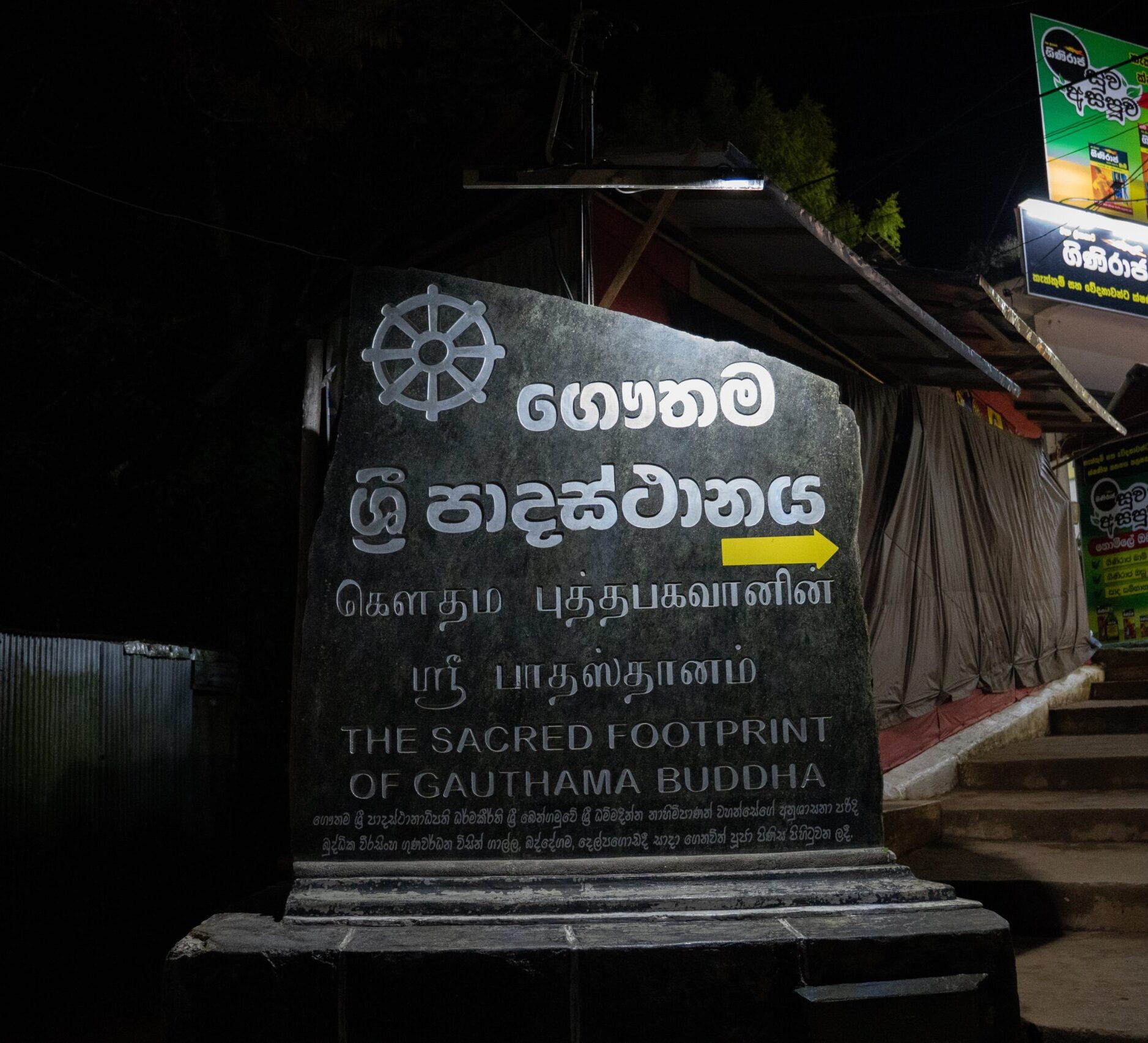
The plaque at the start of the trail of Adam's Peak in Sri Lanka
The start of the trail indicating the direction for the sacred footprint

Bring Cash: The mountain is cash-only as there’s no service for any QR payments or card transactions. Ensure you have small change for toilets and snacks as they may not have change.

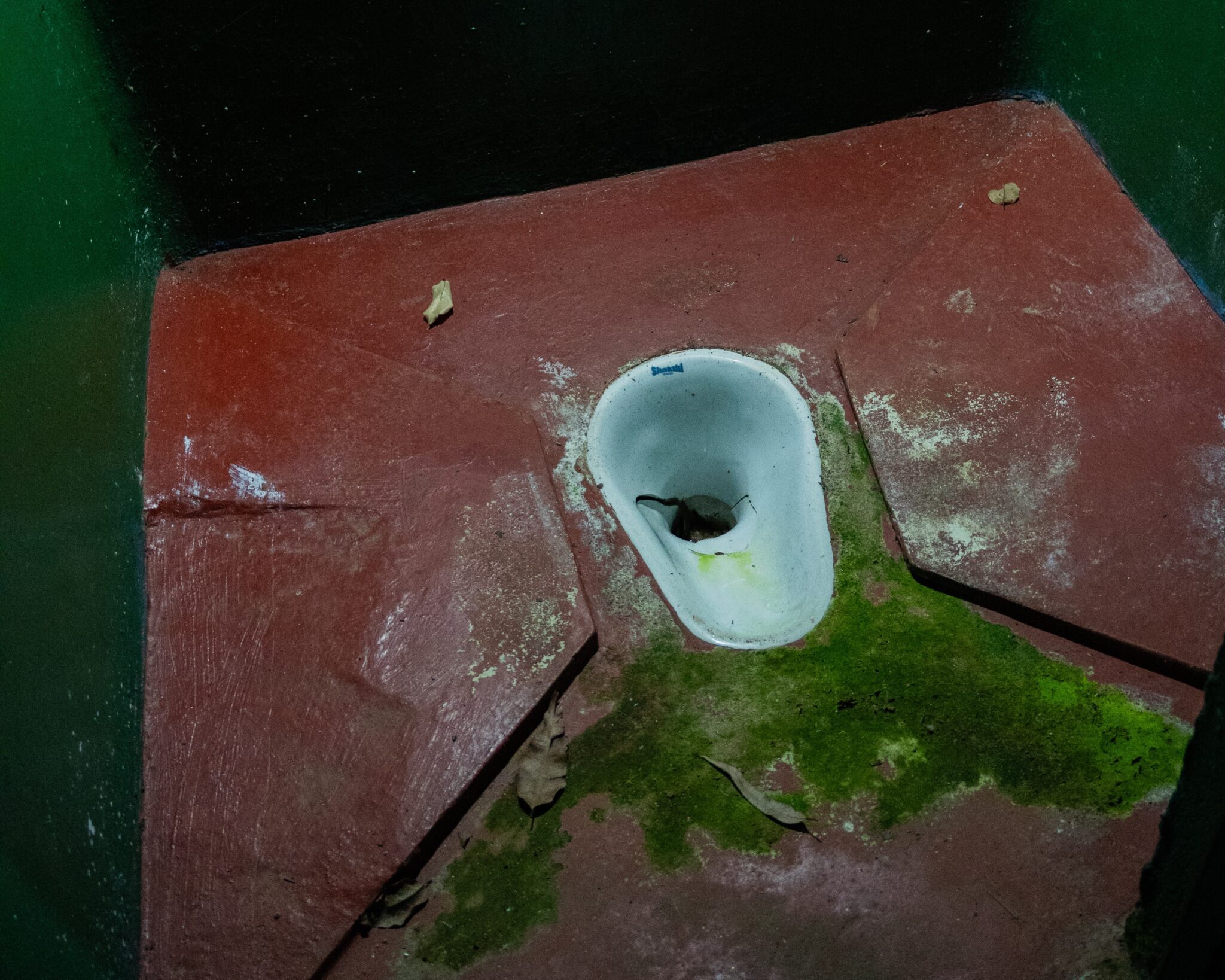
Toiletries: Carry hand sanitisation and toilet paper in your bag. The toilets are basic squat toilets, often with no sinks and definitely no toilet paper.

The Verdict: Is it Worth It?

It’s hard to explain a feeling like hiking Adam’s Peak. The idea of waking up at 2am to do a mega 6000-step climb to an extremely sacred, religious peak as someone who isn’t religious is a little bit wild. However, after experiencing it first-hand, I have to say it was truly incredible experience. 

Yes, it’s physically and mentally exhausting but so wonderfully rewarding. To walk alongside people carrying their babies, the elderly making the climb as a last opportunity before they’re physically unable and people so devoted to their faith is truly inspiring. I met some incredibly friendly people along the way and was overjoyed with a unique feeling of community. 

So, if you’re visiting Sri Lanka purely looking for a casual hike to a viewpoint or photo opportunity then this is not for you. Opt for some of the great hikes Ella has to offer. But if you want to experience a raw, truly inspiring hike then it’s worth every step. Adam’s Peak is an experience. 

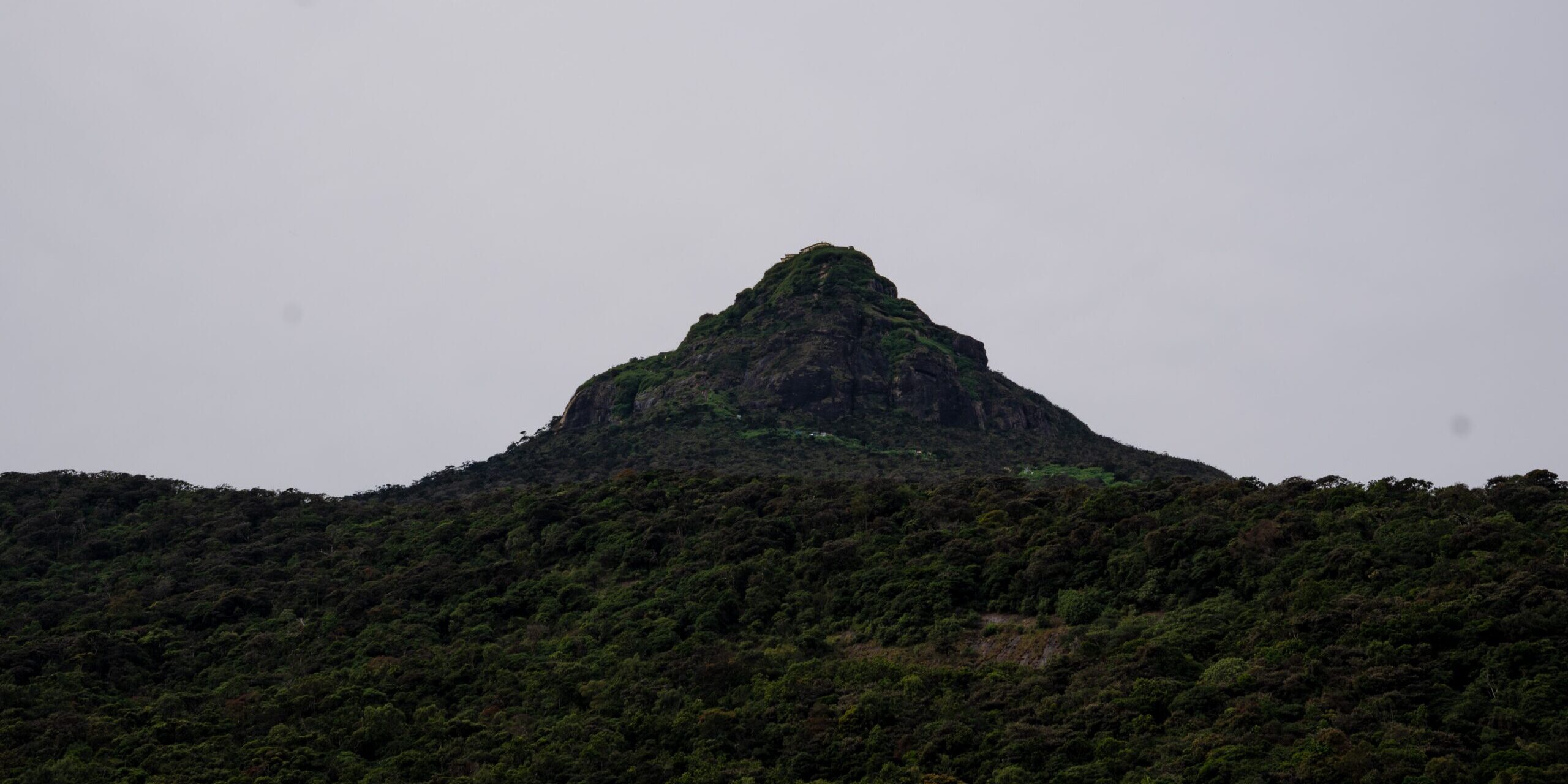
A distant view of Adam's Peak (Sri Pada) in central Sri Lanka
A view of Adam's Peak from the town after my early morning climb

Quick-Fire Questions

How much does it cost? The hike is completely free. There’s no official entrance fee or permit to climb the Hatton route. The only expenses are transport to the base, your room for the night and food and drinks. 

Do I need a guide? Absolutely not! During the pilgrimage season, the path is well-lit and travelled by hundreds of people everyday. It’s near impossible to find a way off of the paved stairs. 

Can children and seniors do the hike? Yes, if they’re physically able. There’s plenty of Sri Lankan children and elderly taking on the hike. Just give yourself extra time for a slower, steadier pace and time to rest more often.

Are there toilets on the trail? Yes, but they are limited. There are public toilets near the start of the trail and at the very top but not in the long middle section. Be sure to use the restroom before you set off. 

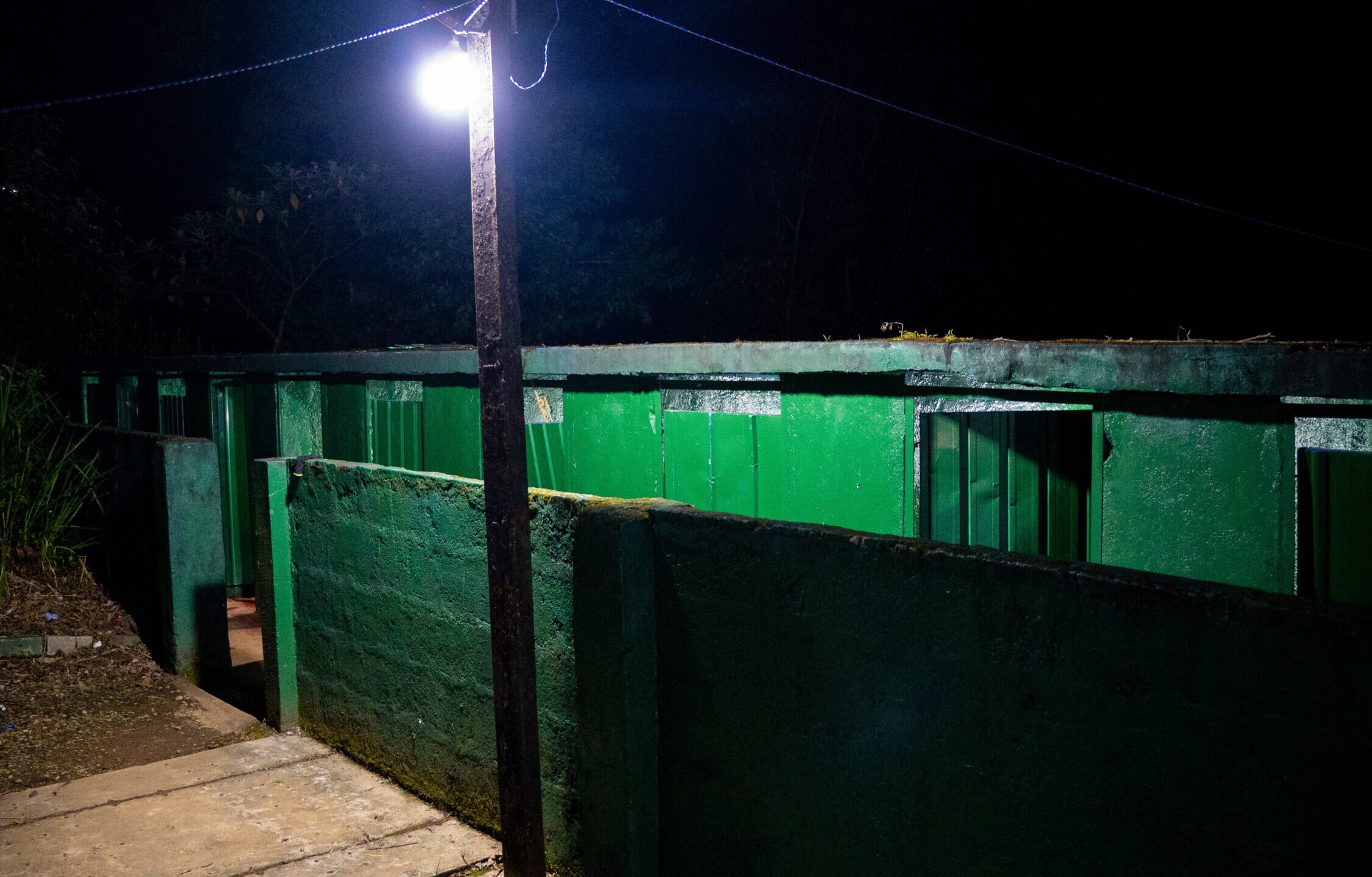
Toilet block located at the start of the Adam's Peak trail in Sri Lanka
The toilet block at the start of the trail
A squat toilet located in the toilet block on a trail to Adam's Peak in Sri Lanka
A simple squat toilet located near the start of the trail

Is there cell-service on the trail? Sometimes, but it’s unreliable. Expect to be disconnected for the majority of the climb. You shouldn’t need access to cell-service so soak in the experience without electronics. 

What if it rains? As the path is concrete steps the entire way, it can become incredibly slippery and dangerous if it rains. If it’s heavy, take it slow and steady or if you can then attempt it the next day. If the rain is light then take a waterproof and just be extra cautious. 

Can I fly my drone? No. Sri Lanka has strict laws for flying drones which require mandatory registration and permits. Flying drones over active religious sites is prohibited so leave the drone in your room. 

Is it safe? Yes, it is safe. The trail is wide, well-lit and filled with friendly people who will look out for others. The only safety concern is physical exhaustion, and slipping on the steps. That said, I would recommend doing the hike with someone to keep you company. 

Can I buy water and food on the way up? Yes. There are plenty of local tea stalls and small shops selling hot chai, fresh roti, water and snacks. Keep in mind the higher you climb, the more expensive it becomes as locals have to carry all their inventory up these gruelling stairs.


Do I need cash or card? Cash, and cash-only. There’s no service for any QR payments or card transactions on the mountain. Be sure to carry small change for toilets and snacks as the sellers may not have change.


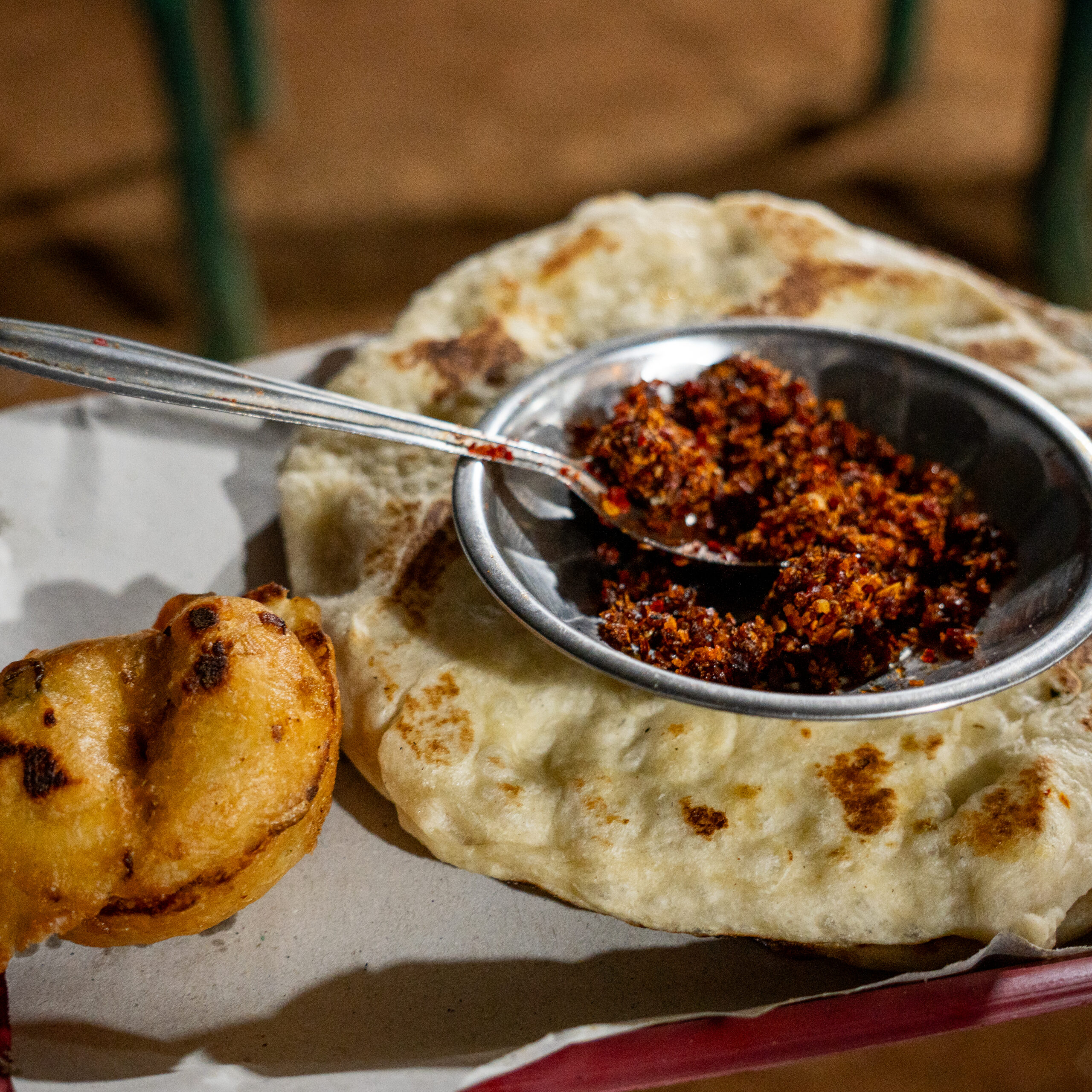
A roti and medu vada served with a chilli condiment
A roti and medu vada served with a chilli condiment that we got freshly warmed on the way up the mountain

Blog Posts

Adam’s Peak isn’t just for the view, it’s to witness centuries old convergence of human faith. Here's everything you need to know to conquer Sri Lanka's most sacred mountain yourself.

Hiking in India, especially the Himalayas is incredible and the Triund Trek in Dharamshala is just that. Here's everything from views, costs to lessons.

If you’re considering a trip to Kasol or thinking of hiking to Grahan Village then I’m here to share my unfiltered experience and the reality of whether I think they’re worth your time or not - but also everything you might need to know if you still want to go.

Scroll to Top