Visiting the Golden Temple in Amritsar: Etiquette, Timings & Essential Tips
This post contains affiliate links, which means I may earn a commission if you make a booking, at no extra cost to you.
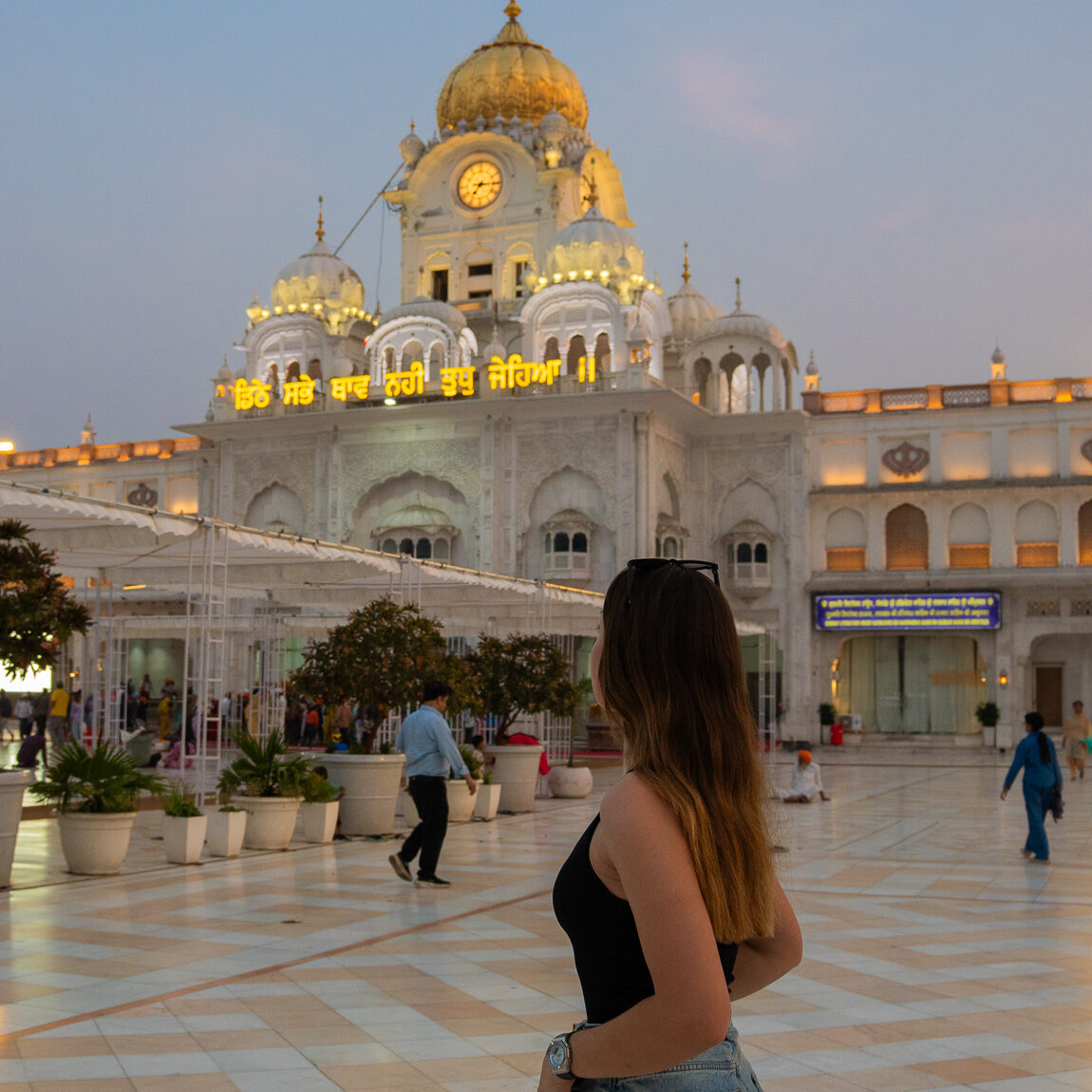
The Golden Temple in Amritsar is one of India’s most outstanding religious sites and one of my own personal favourites. Officially called Sri Harmandir Sahib, this marble and gold masterpiece welcomes over 100,000 visitors every day.
Whether you want to learn more about Sikhism or experience the warmth of the people, this guide covers everything you need to know before visiting the Golden Temple – from history and etiquette to exploring the complex and dining at the world’s largest free community kitchen.
Contents
What is the Golden Temple
The Golden Temple is the spiritual heart of Sikhism. It was founded in 1577 by the fourth Sikh Guru, Guru Ram Das and it was completed in 1604 by Guru Arjan Dev.
Many traditional religious buildings are grand, often built at an elevation for many reasons including proximity to heaven or a god, separation of a sacred space from the ordinary world, and so on. The Golden Temple, however, was deliberately constructed at a lower level than the city to symbolise humility. With four entrance doors – facing North, East, South and West – signifying that people from everywhere are welcome.
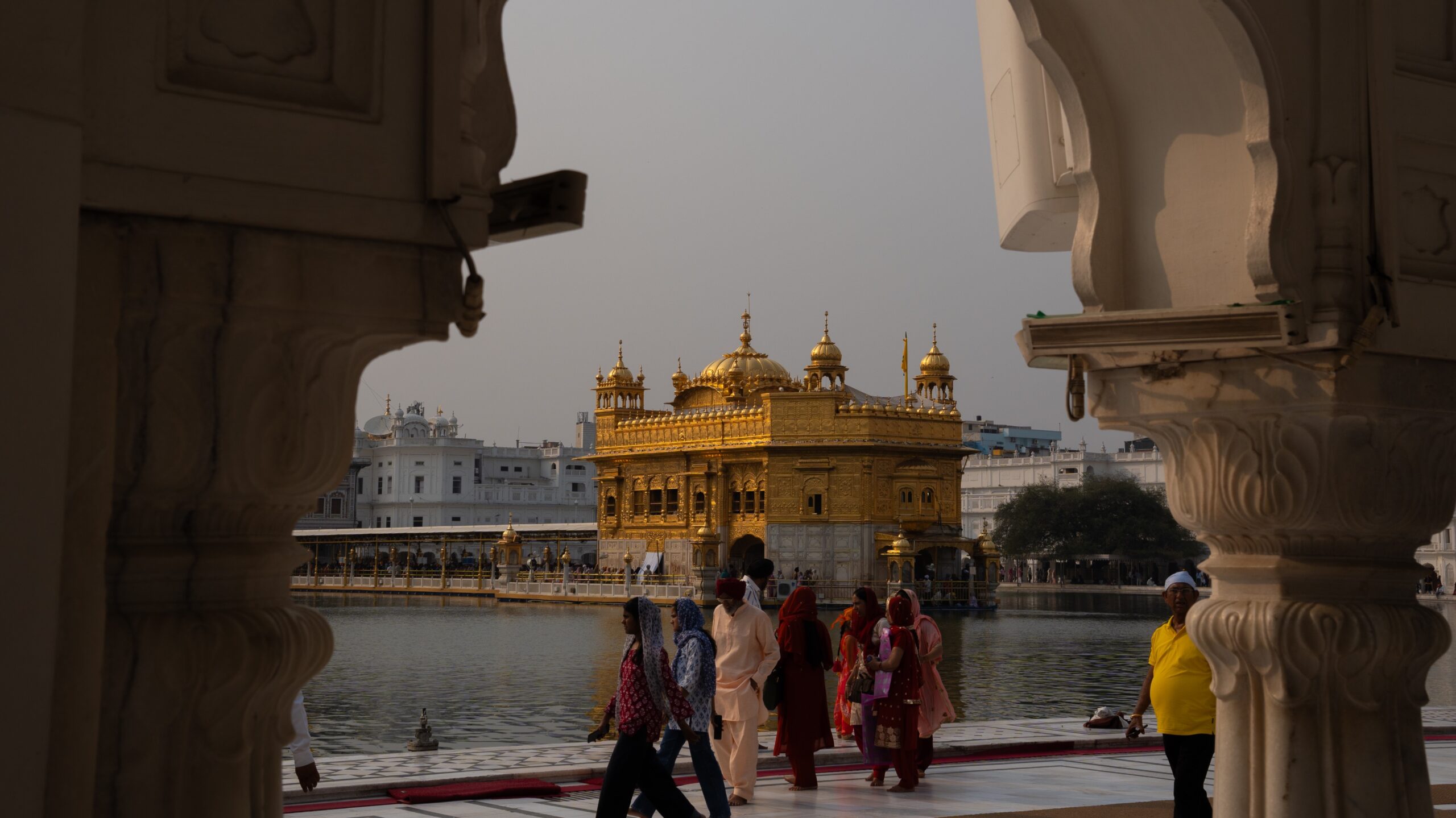
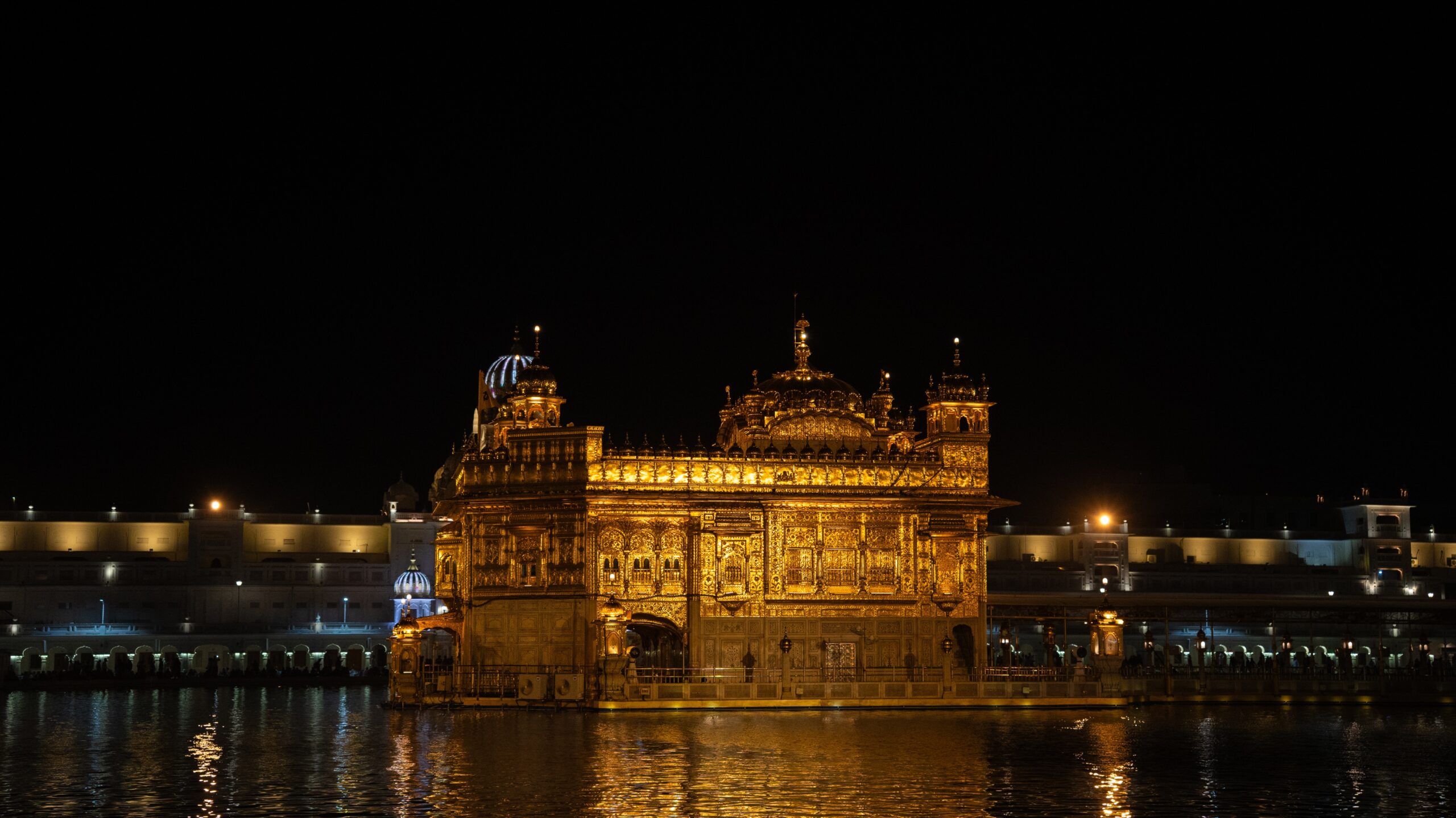
The main shrine, which sits in the Amrit Sarovar, holds the holy scripture of Sikhism, the Guru Granth Sahib. It’s connected to the main marble walkway by a narrow causeway. The upper floors are clad in over 750 kg of pure gold leaf, a grand embellishment commissioned by Maharaja Ranjit Singh in the early 19th century.
What to See in the Complex
The complex expands beyond the iconic central shrine and I’d recommend setting aside at least 4 hours for a full experience here – you might even want to return at a different time of day (I did!).
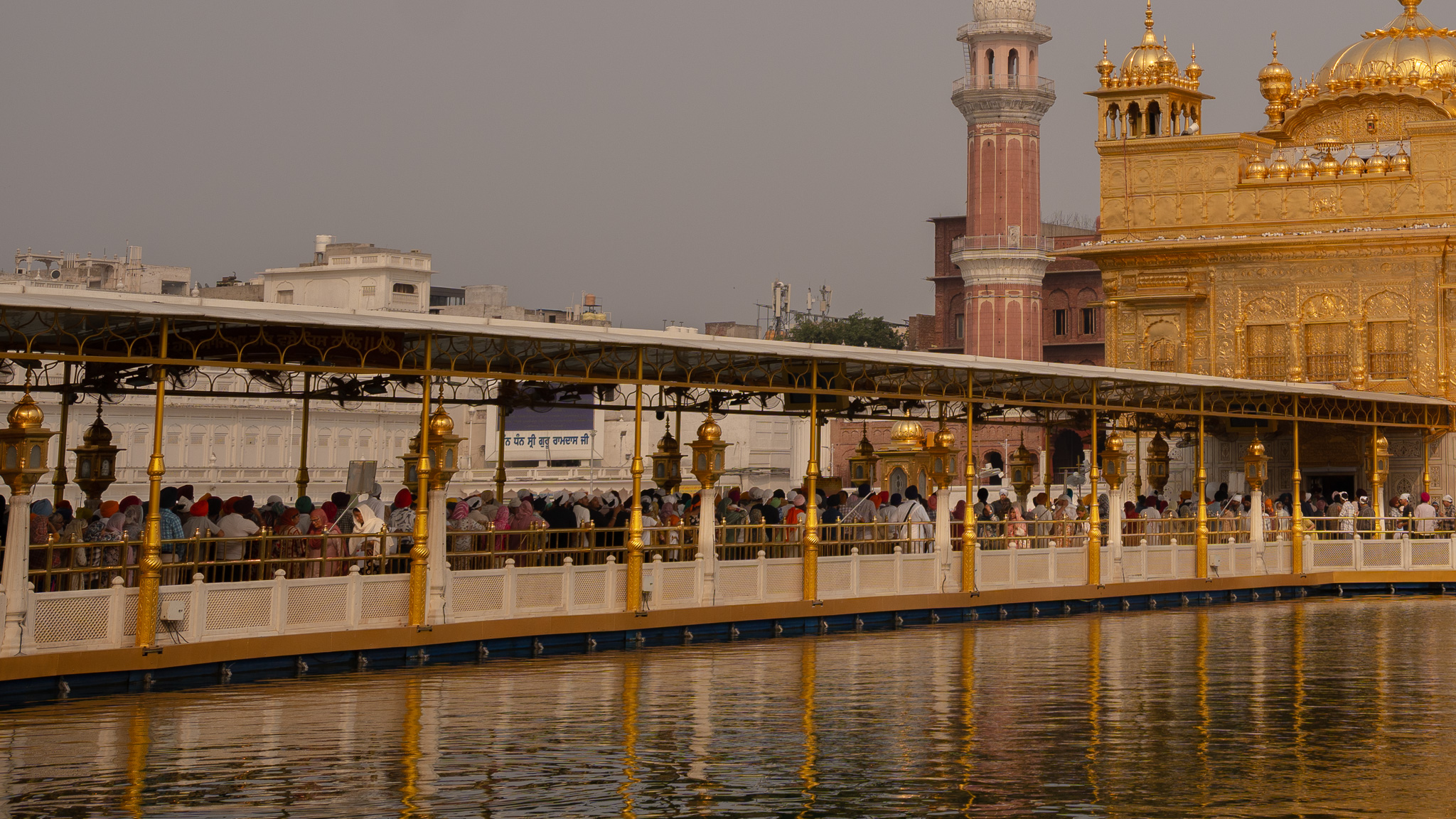
Harmandir Sahib (The Central Shrine): Walk across the Guru’s Bridge to go inside the golden inner sanctum, where the holy scripture is kept and live devotional music (Kirtan) is played.
Note: Getting inside requires waiting in a long queue which can take anywhere from 45 minutes to 3 hours depending on the time of day.
Amrit Sarovar (The Sacred Pool): Devotees take holy dips in designated male and female areas, called Tukis, within the huge pool that surrounds the main shrine. The water comes from subterranean springs and is believed to have spiritual healing properties. You’re welcome to take a dip or just observe others.
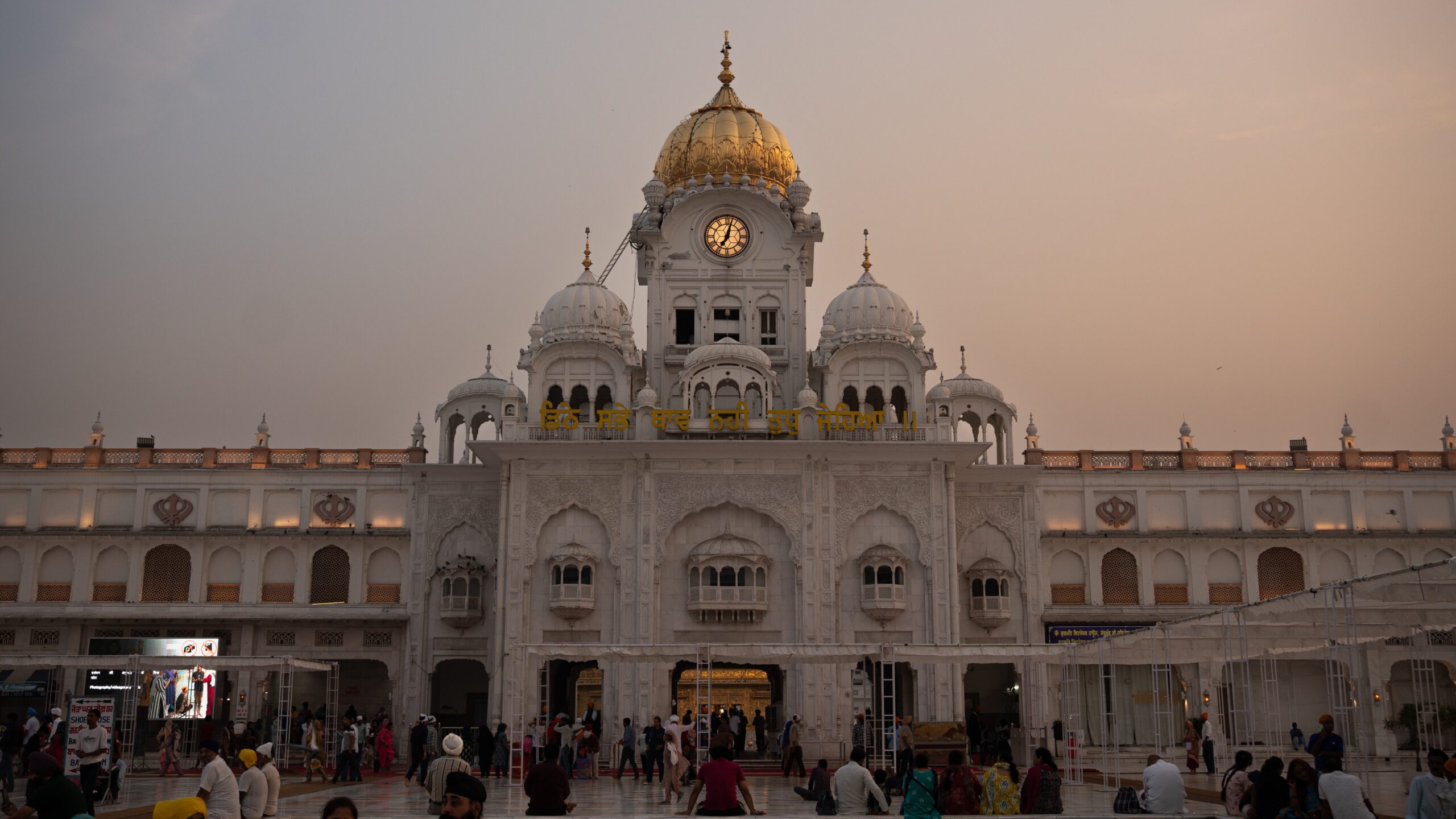
Akal Takht (The Sovereign Throne): The multi-story building opposite the central causeway serves as the highest seat of earthly authority in Sikhism. This is where historical weapons used by Sikh Gurus and warriors are displayed every evening.
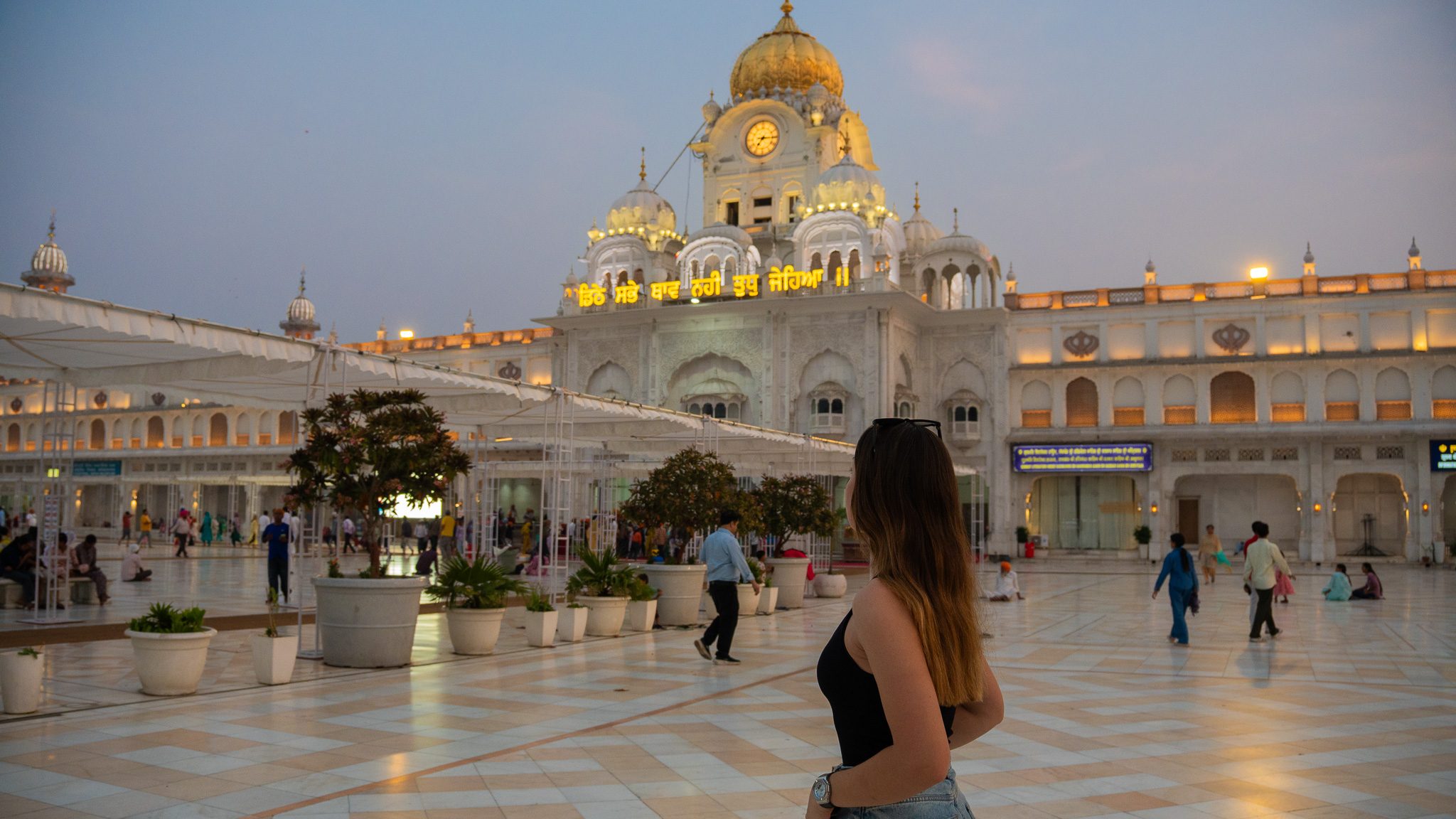
Central Sikh Museum: The gallery showcases ancient manuscripts, historical weapons, and detailed paintings depicting Sikh history. It is located above the main clock tower entrance and admission is completely free.
Dukh Bhanjani Beri (The Healing Tree): A Jujube tree that is around 400 years old. It’s located on the eastern side of the marble path and is one of the most crowded spots along the walkway as many visitors stop here to pray or touch the water nearby in hopes that it’ll bring physical healing, peace or comfort.
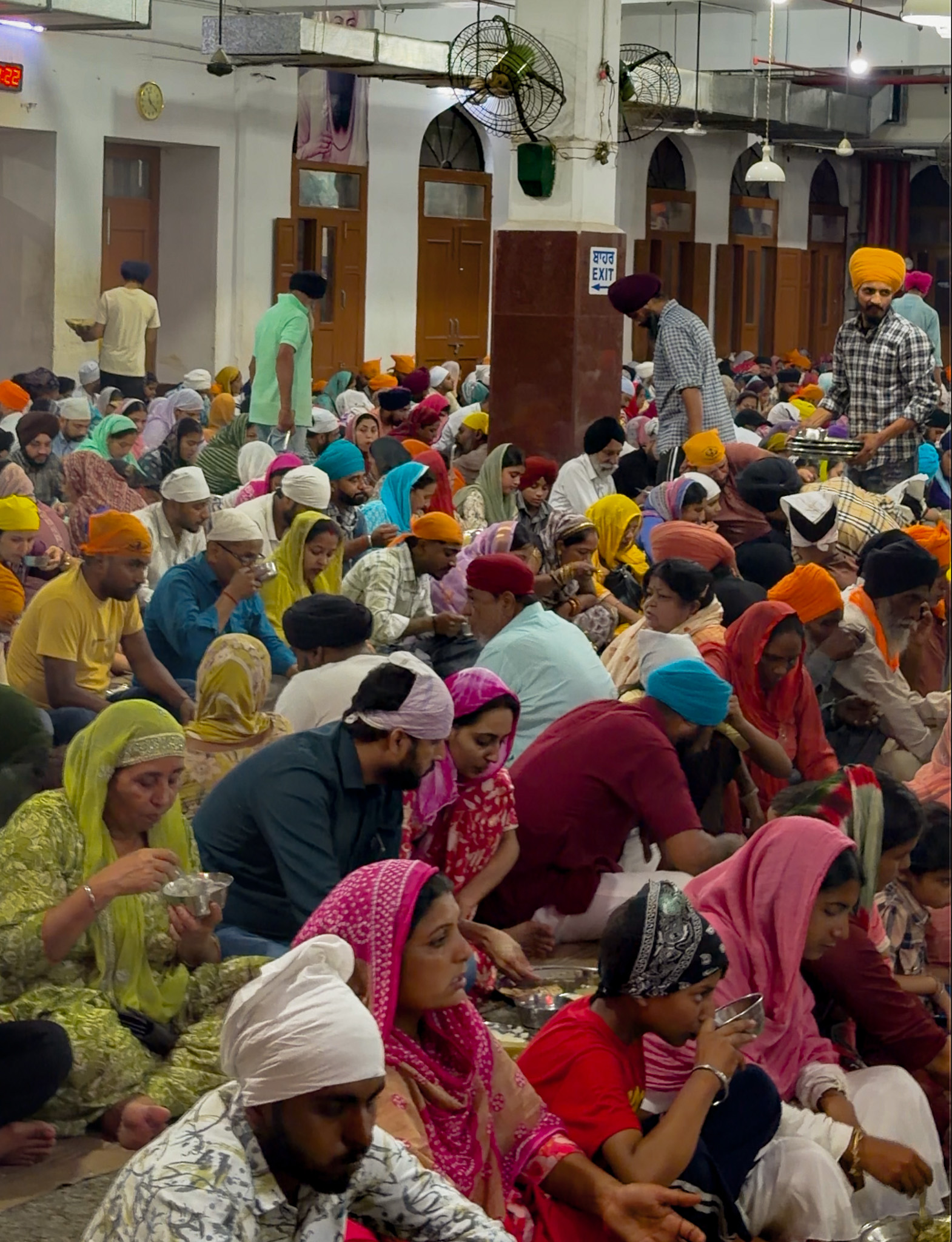
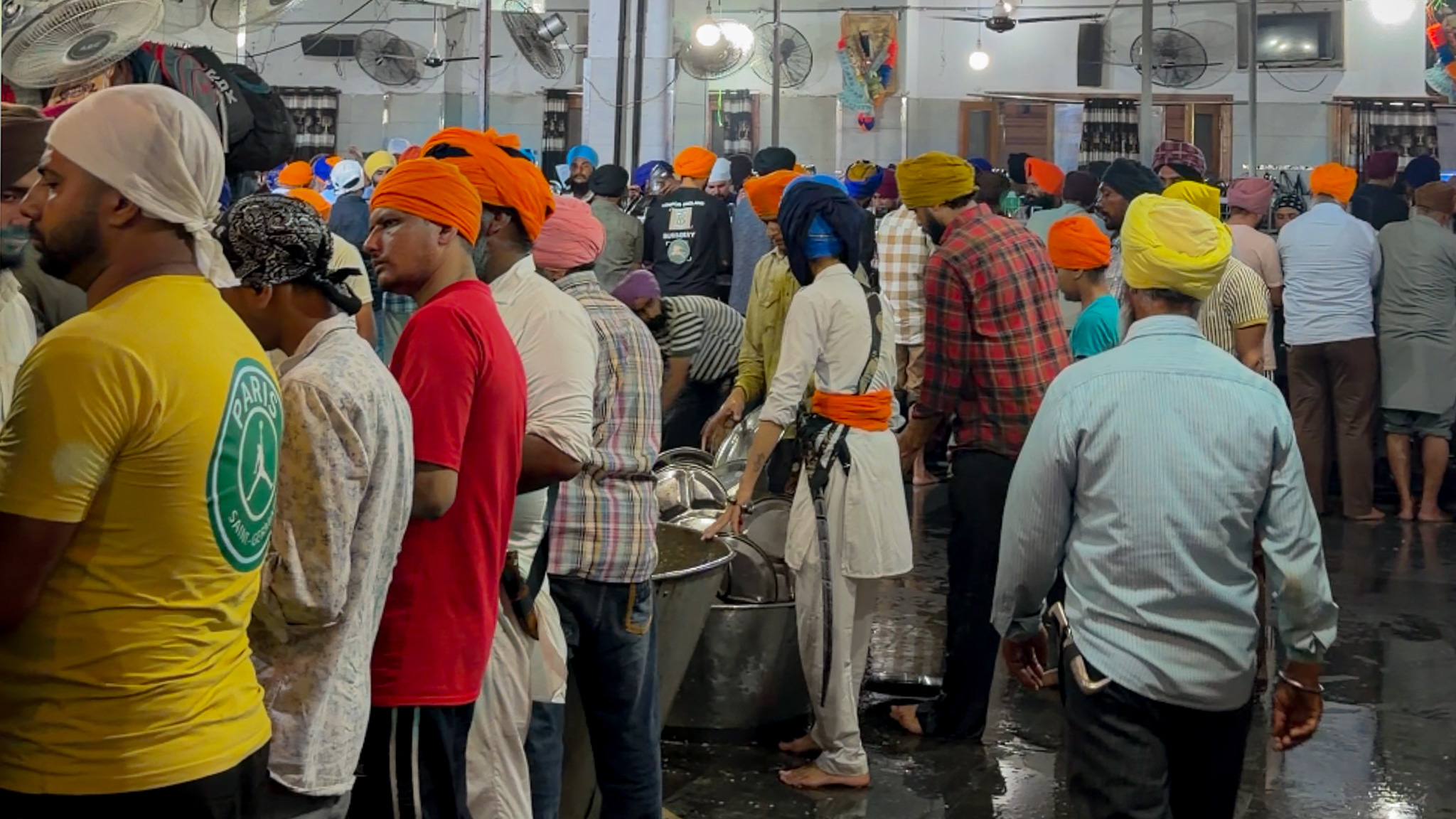
Guru Ka Langar: As the world’s largest community kitchen, every day volunteers provide vegetarian meals for around 100,000 people. Be sure to head in and experience it for yourself.
How the Guru Ka Langar Works
Experiencing the Guru Ka Langar is a real testament to the values of Sikhism and one you shouldn’t miss. Here’s how it works:
- Entry: As the crowds move into the dining areas, you’ll be handed a metal tray, a bowl, and a spoon.
- Seating: Everyone sits side-by-side on the floor in rows. There’s no special treatment for anyone here, everyone is equal.
- The Food: Volunteers walk around the rows distributing hot dal, roti, rice and kheer. They will also fill your bowl with water.
- Etiquette: Cup your hands together receive your roti. Make sure you finish all the food given to you, out of respect and to reduce waste.
- Volunteering: Anyone is welcome to join the Seva. Just inform a volunteer that you would like to volunteer and they’ll show you where you can help out – typically you’ll be assigned to help wash dishes.
Essential Etiquette & Rules
As an active place of worship, it’s important that you follow these simple but strict rules before and during your visit to the Golden Temple:
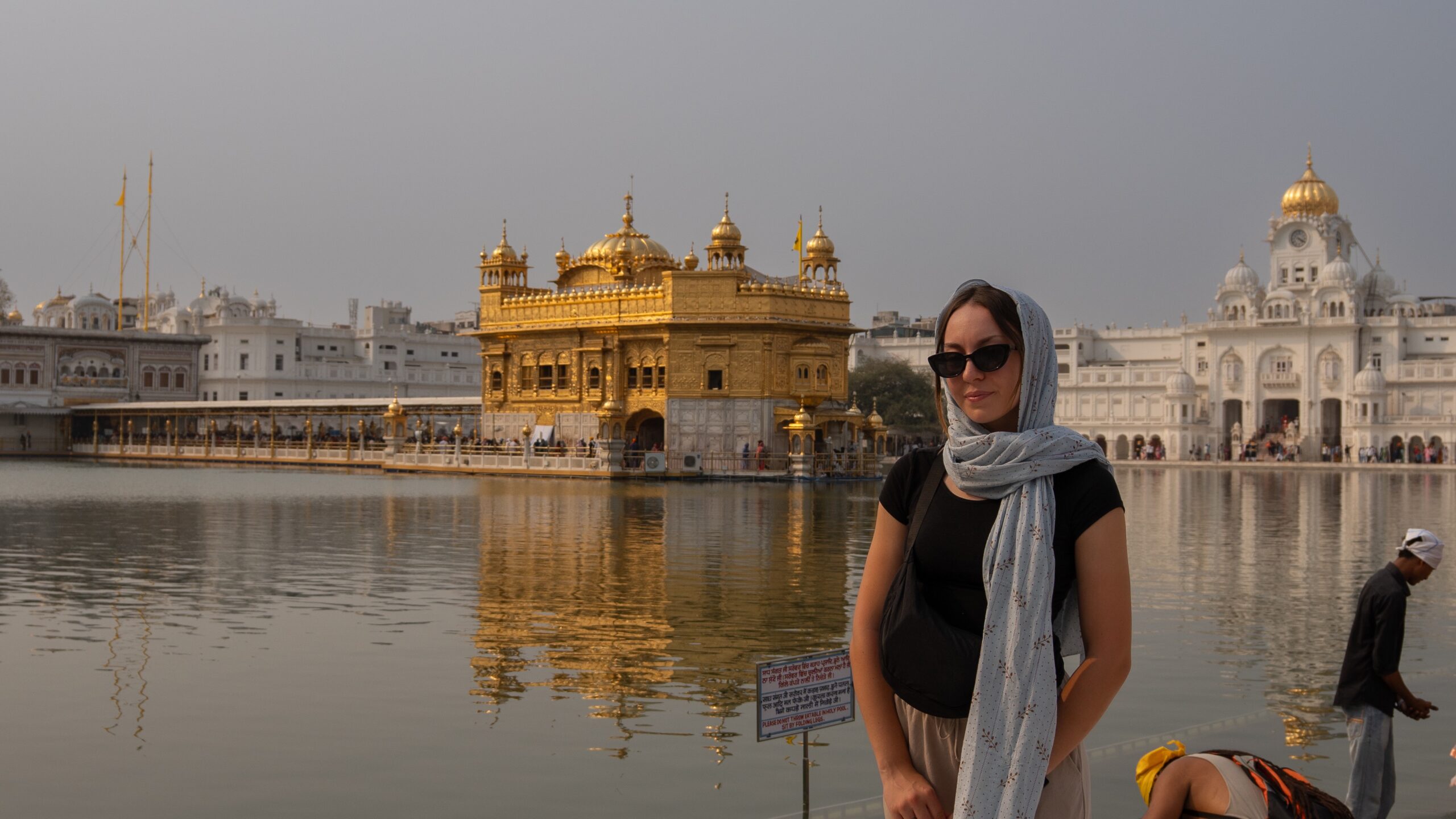
Cover Your Head: Everyone is required to cover their heads at all times inside the complex. Either bring your head covering or pick up a head scarf nearby, there’s plenty to choose from. I got one for 200INR ($2.10) and I used it across my travels in India after the visit. For males, they sell bandanas for 10INR ($0.11) at plenty of stalls nearby. Free, reusable bandanas are also available outside each entrance inside a bucket if you don’t want to purchase one but I’d recommend getting one as they make a good souvenir too.
Remove Shoes and Socks: Footwear is forbidden so leave them at the free shoe storage counters near the entrances.
Wash Hands and Feet: Before entering the complex, walk through the shallow water baths at the entrances to cleanse your feet, and wash your hands at the nearby hand wash basins.
Dress Modestly: Clothing must cover your knees and shoulders. Don’t wear anything revealing, be respectful.
Prohibited Items: Alcohol, tobacco, drugs and meat are forbidden anywhere near the complex.
Photography & Videography Guide
Rules on photography and videography are a little confusing as there is no place to state the exact rules and information online isn’t clear.
However, here’s what I gathered from my time visiting the complex: photography (with a phone or handheld camera) is permitted around the main shrine but strictly prohibited inside. Photos of yourself with the temple in the background are permitted as long as they are respectful – guards will ask you to put your hands together when taking a photo.
Taking videos was the biggest confusion as they appeared to be prohibited as we saw guards taking peoples phones when spotted taking videos. However, other times they seemed fine with it. I think short videos are fine but nothing more.
Drones are an absolute no-go as they are illegal here and the surrounding area.
As for equipment, standard cameras are permitted but anything like tripods, selfie sticks, flashes and bulking equipment is not allowed.
The Golden Temple is extremely photogenic and offers beautiful photos. Lighting is typically best around sunset. If you’re an early riser then early morning light will also offer perfect photo opportunities. Avoid harsh sunlight in the middle of the day if possible.
Best Time to Visit
Prakash Ceremony (4am – 5am): The holy scripture is brought from the Akal Takht to the main shrine. It’s a peaceful atmosphere with few crowds.
Daytime (8am – 6pm): The busiest time generally, offering a vibrant energy and great lighting for the viewing the architecture. However, queuing times for the inner shrine are longest during the day.
Sukhasan Ceremony (10pm-11pm): The holy scripture is taken back to the Akal Takht for the night. The air is cooler and the atmosphere is calmer during this time.
I personally visited twice, once in the daytime from around midday to late afternoon and the second time at night for the Sukhasan Ceremony. If you choose to visit during the day, be aware that the heat is intense so ensure you give yourself time to sit and experience the environment without rushing. Visiting at different times of day offer a different experience so if you have time to visit twice then I’d highly recommend doing so.
Practical Tips
- If you don’t want to wait too long for going inside the main shrine then visiting before sunrise will reduce waiting times massively.
- In summer, the marble floor can get insanely hot – trust me, I burned the soles of my feet! There are red mats laid out on the floor to stop this from happening so watch your path and stick the mats only.
- Stay hydrated. There are drinking water stalls around the outside of the marble walkway but if you’re unsure about the water as a foreigner then take bottled water.
- Small backpacks and bags are allowed inside, anything larger should be left at the baggage storage – next to the shoe storage.
- The token you’re given when you leave your shoes ensures you get the right shoes back, keep it safe!
- When sitting around the marble walkway, never point your feet towards the main shrine or sacred water as it’s seen as disrespectful. Sit cross-legged or with your legs to the side.
- For help with accessibility and wheelchairs, volunteers will be able to assist with help and ramps etc.
- Safety is often a concern for travellers, especially solo travellers and female travellers but there’s no need to worry here at all. It is extremely safe and welcoming.
Looking for other Amritsar Guides?
Hi, I'm Kelly!
Welcome to The Untold Journeys, a travel blog with a focus on raw, authentic travels and finding those exciting hidden gems.
I’m here to share my experiences and stories to give you everything you need to explore the world and head on your own adventures.
Recent Posts
Blog Posts
This guide covers everything you need to know before visiting the Golden Temple in Amritsar, India - from history and etiquette to exploring the complex and dining at the world’s largest free community kitchen.
Every sunset at the Wagah Border is the impressive Indian - Pakistani ceremony. Here's my guide to experiencing the ceremony like a VIP, for foreigners.
If you’re looking for a unique experience of mountains walks, Tibetan history and incredible food, here is everything you need to know before visiting India’s “Mini Tibet”.