How to Find the Real Blue City of Jodhpur: Location Pins & Walking Route
This post contains affiliate links, which means I may earn a commission if you make a booking, at no extra cost to you.
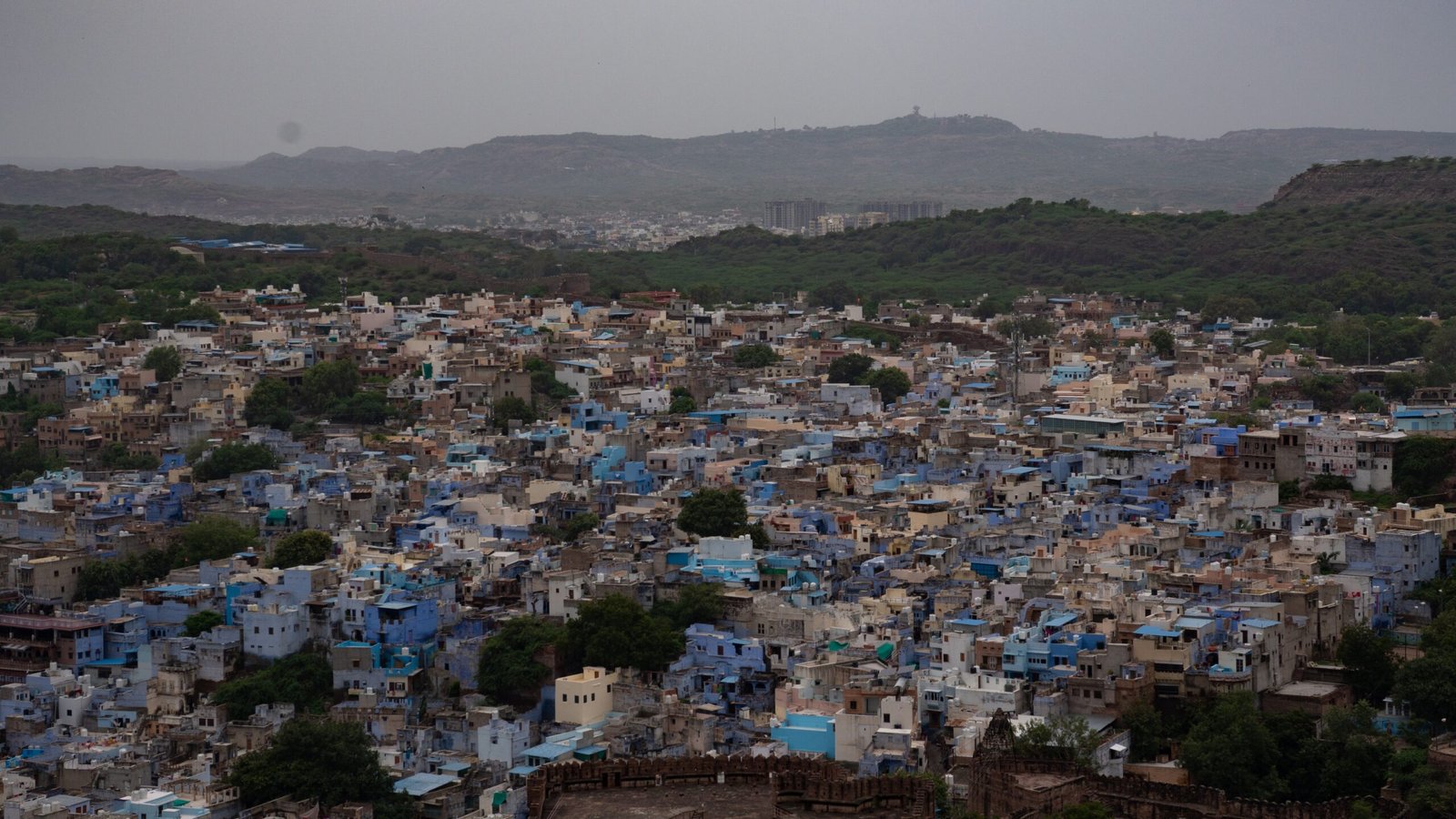
Jodhpur is portrayed online as a city full of vibrant blue alleyways, painted doorframes, and blue rooftops. It looks like a unique desert dream and many travellers, myself included, arrive expecting the entire city to be painted blue. However, the reality is completely different.
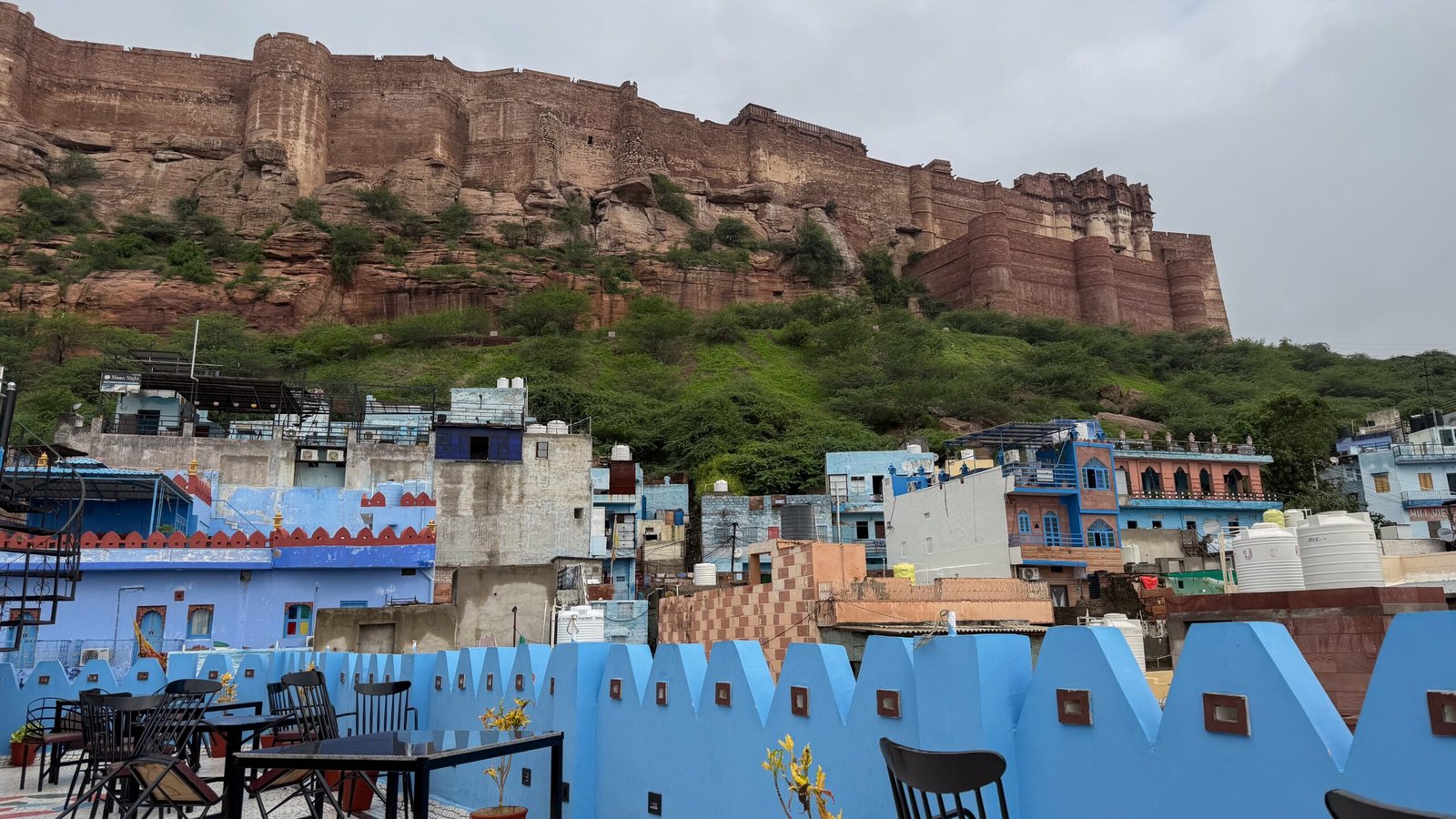
The iconic “Blue City” isn’t everywhere. It can be found within specific neighbourhoods right beneath the towering walls of Mehrangarh Fort. This guide explains why these streets exist, where to find them, a walking route and etiquette to keep in mind while wandering the city.
Contents
Why is Jodhpur Painted Blue
There are many reasons why the houses and streets in Jodhpur are blue:
Brahmin Identity: Originally they were painted with indigo copper-sulphate washes by the Brahmin caste as a way to distinguish their homes from people they considered to be below them.
Heat Reflection: Lighter shades of indigo-tinted whitewash help to reflect the intense sunlight that burdens the desert state. This helps to keep inner courtyards significantly cooler during the summer months.
Natural Insect Repellent: The indigo with copper compounds was mixed into lime-wash to act as a chemical defence to deter insects like ants and mosquitoes from damaging older architecture.
Expectations vs Reality
Before heading out onto the streets with your camera, I’d suggest setting realistic expectations to avoid disappointment:
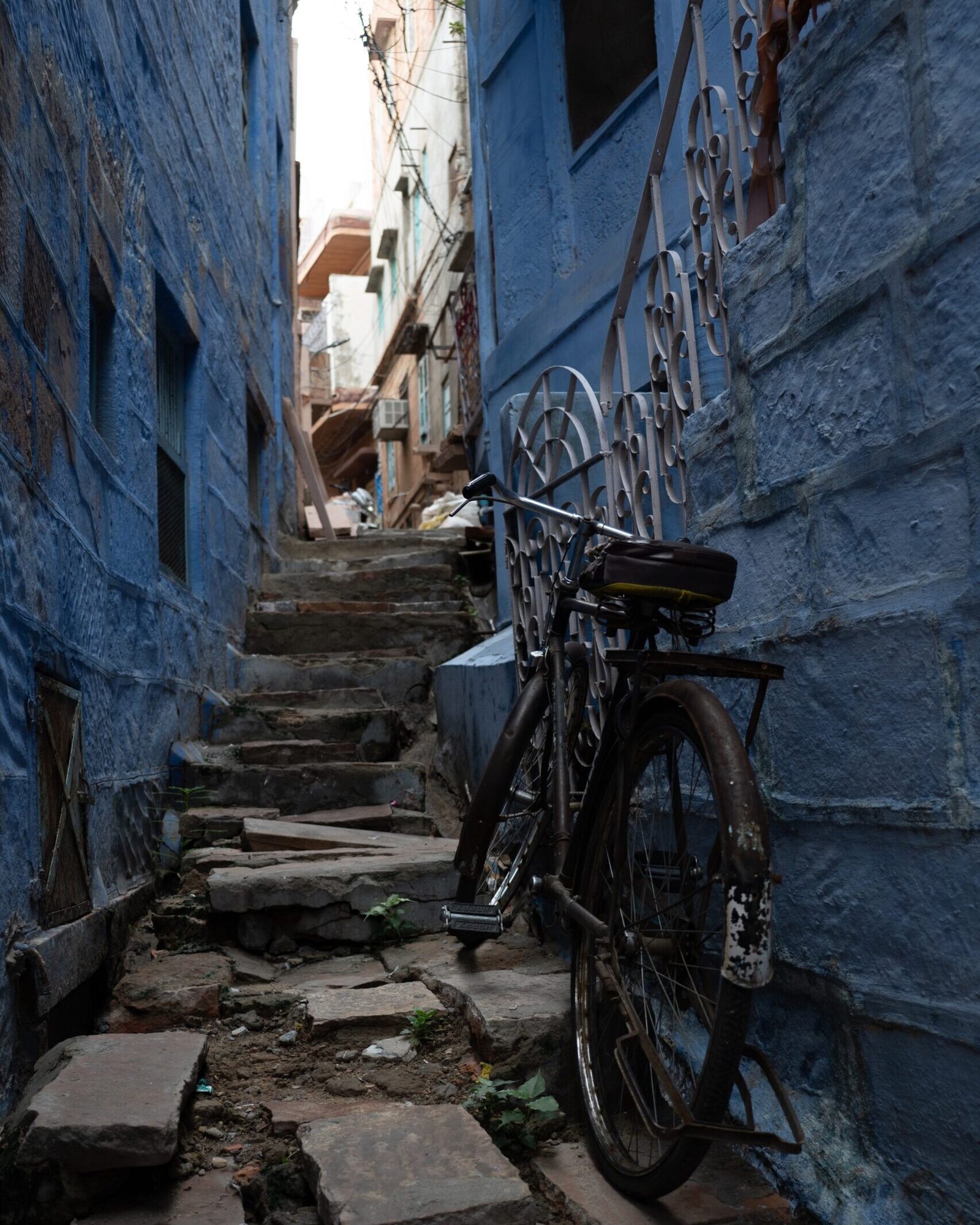
Small Concentrated Areas: Unlike cities like Chefchaouen in Morocco, Jodhpur is not a fully painted tourist village. Only around 10% – 15% of the city has blue buildings and they aren’t always next to each other so you’re more likely to find individuals blue buildings rather than blue streets.
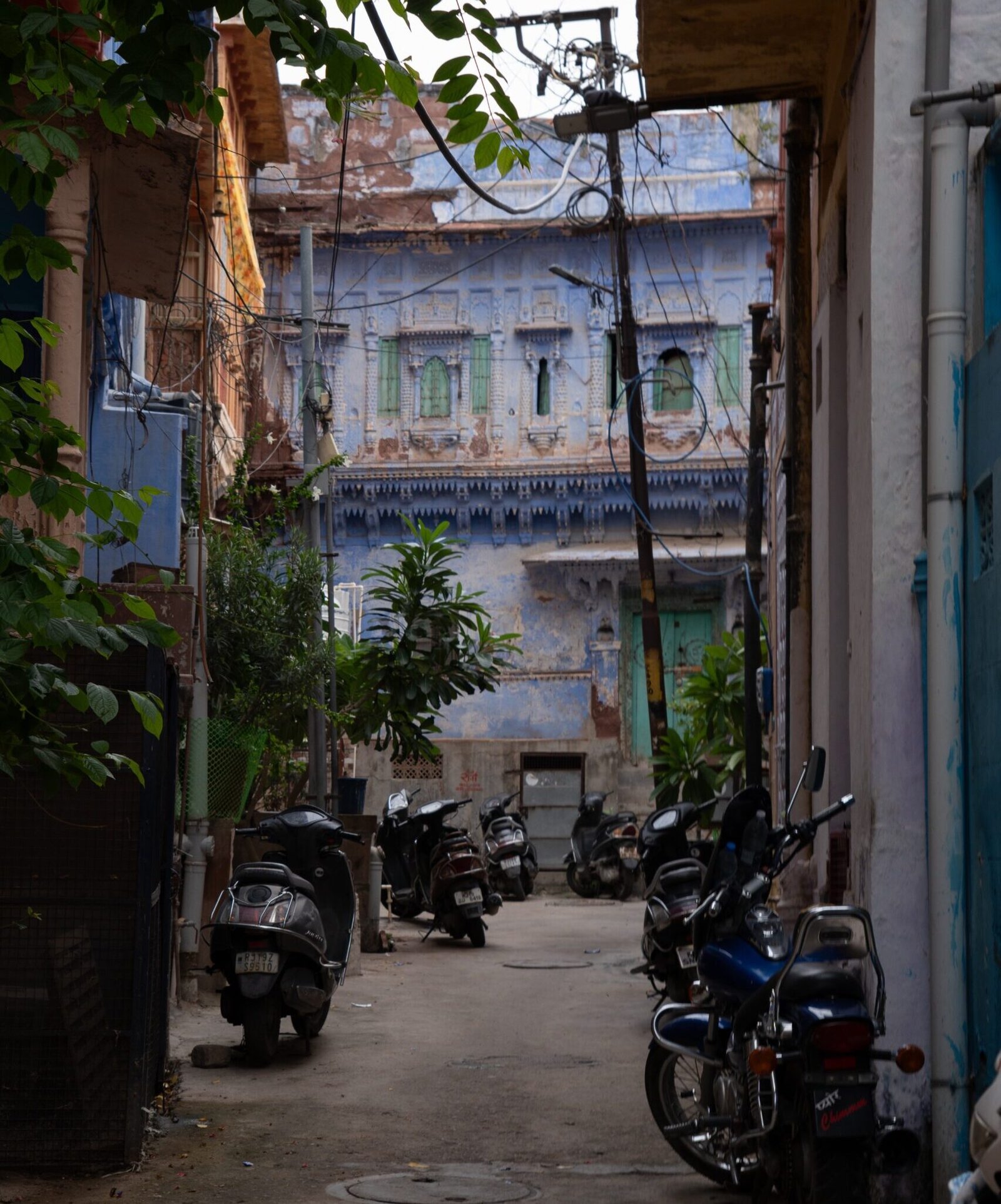
Faded Blue: Over time, the indigo wash on buildings has faded and as the reasons for them being blue are no longer relevant beyond tourism, locals don’t need to restore the wash. The photos you see online are often edited, the instagram girlies pull up the saturation and photographers are out to enhance the images they’ve captured.
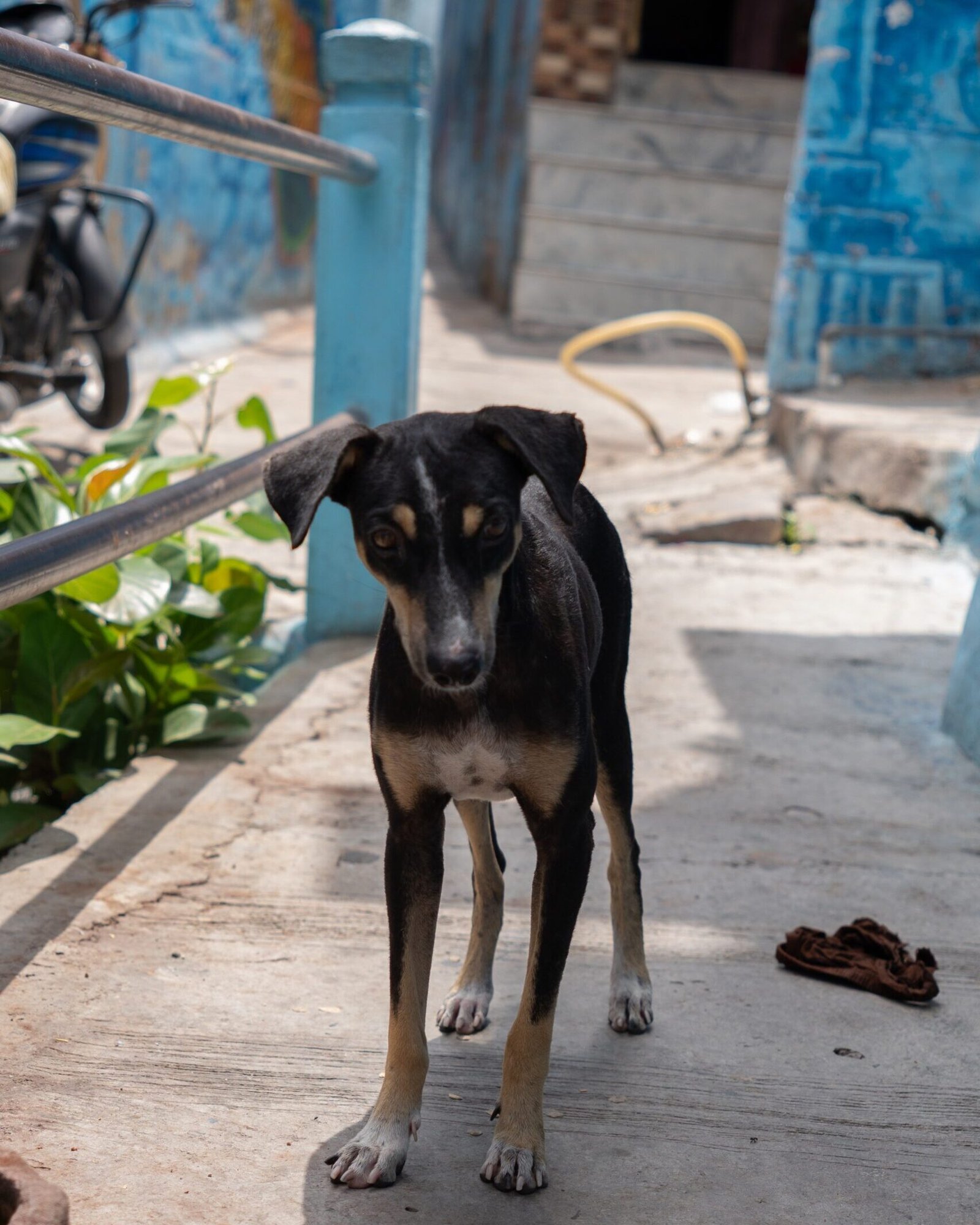
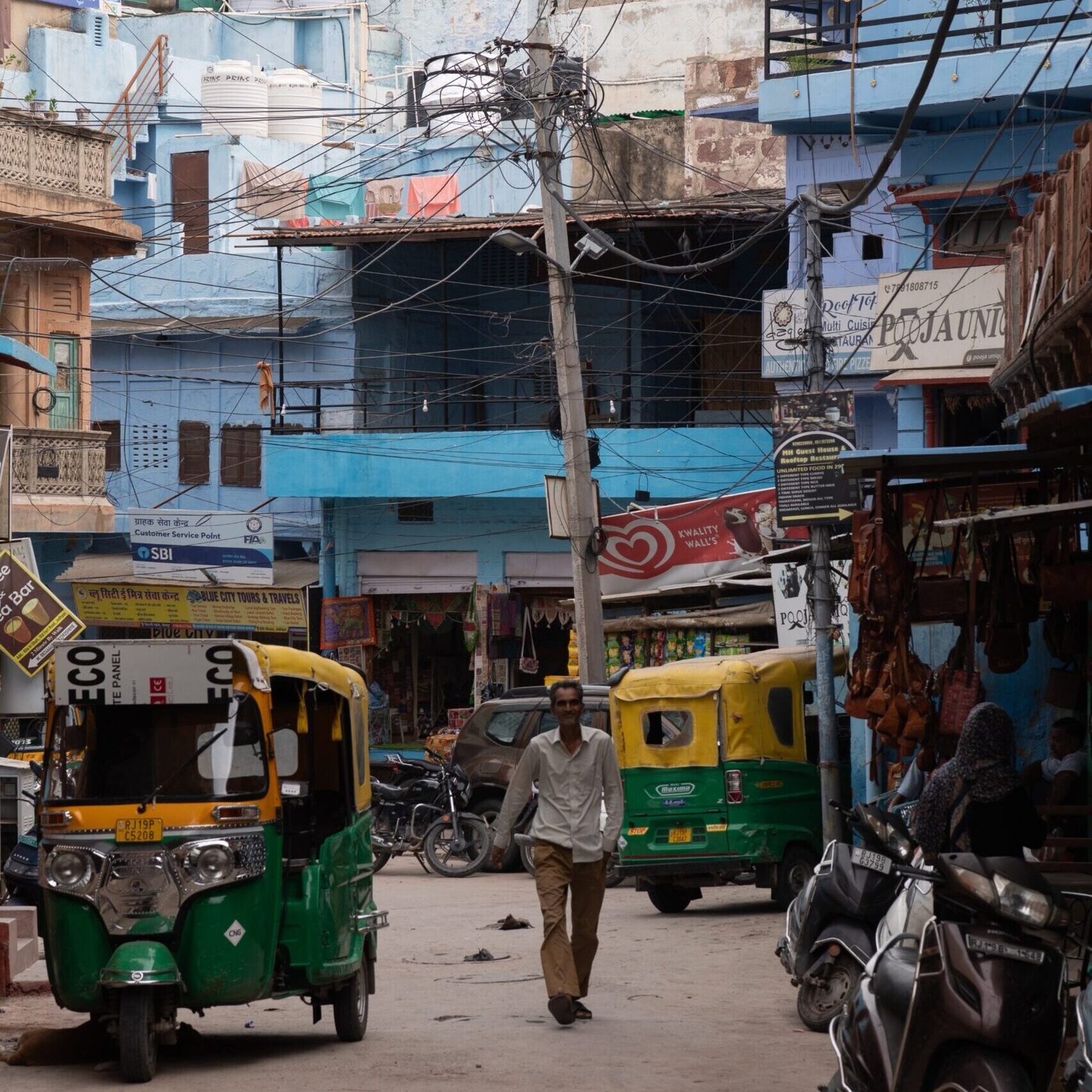
Lived-in Neighbourhoods: The popular streets are active residential zones and are family homes. You’ll find scooters zooming around, stray dogs on the street side and locals going about their daily tasks.
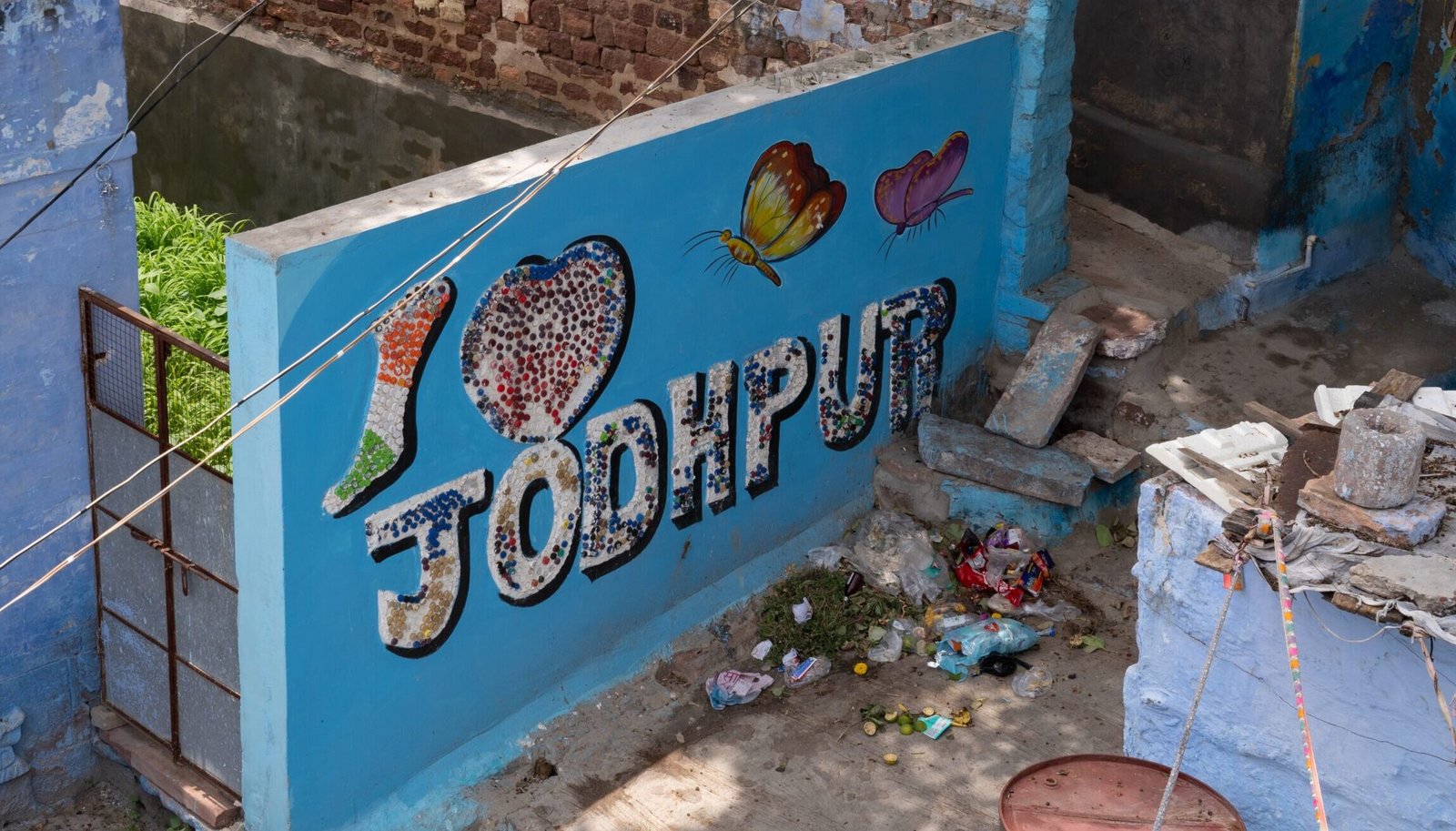
Dirty Streets: The narrow streets mean a build up of dirt, dust and waste. Watch your step and wear closed-toe shoes if possible.
Neighbourhoods & Key Locations
The main neighbourhoods of the “Blue City” are located right near Mehrangarh Fort:
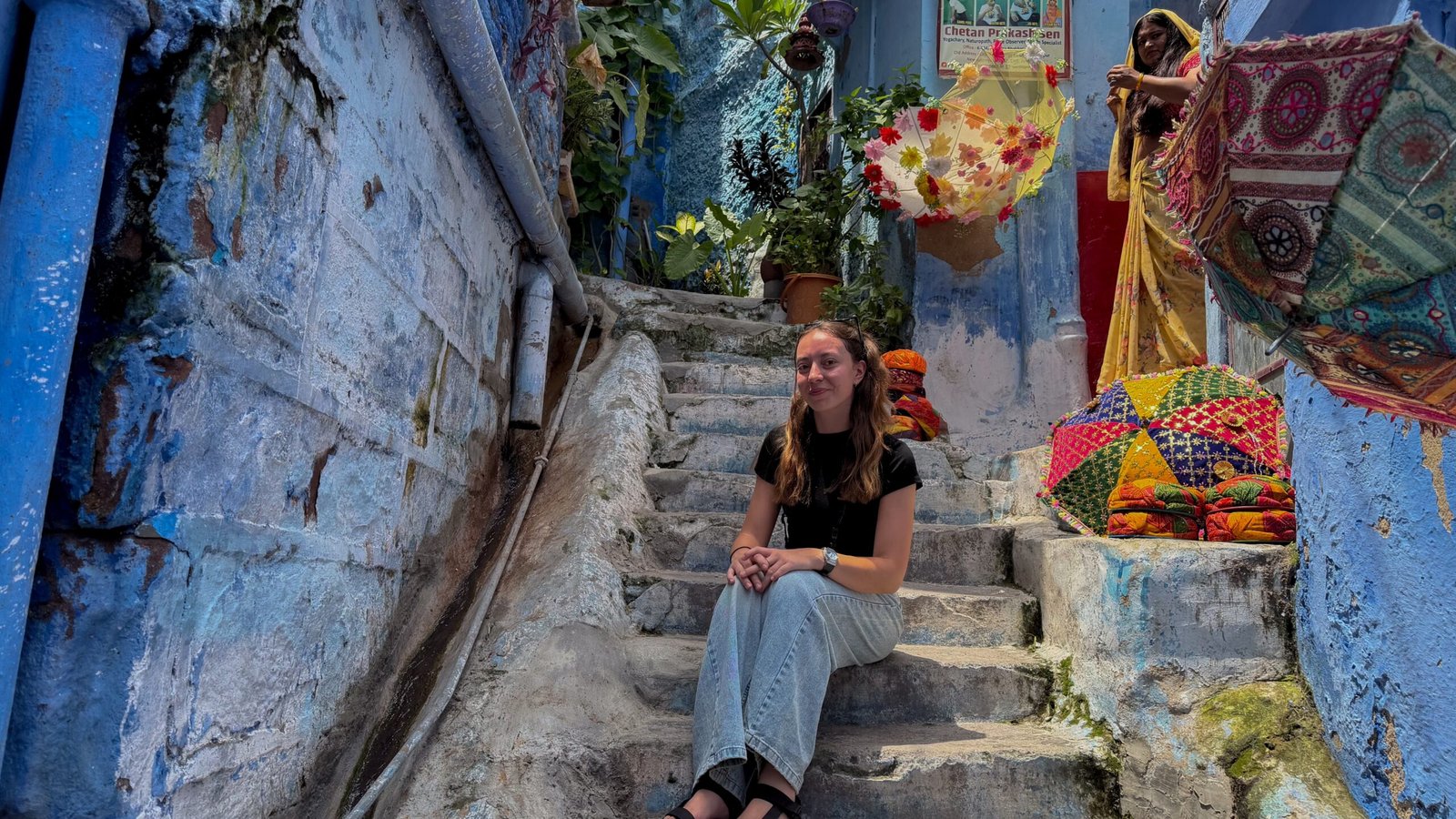
Navchowkiya: Located on the western side of the Old City, it is considered the best neighbourhood for the indigo lanes as the blue buildings are more common, the streets are quieter and many wooden doors are carved.
Brahmpuri: At the base of the fort near to Chandpole Gate is the oldest Brahmin quarter and is home to some of the deepest royal-blue walls.
Pachetia Hill: A short 10-minute climb to this rocky viewpoint will offer a 360-degree rooftop view over the blue neighbourhood below and the fort above.
Blue City Walking Route
If you’d like to explore the Blue City in an organised, self-guided manner then consider this 2-hour morning loop to hit the main spots of the Old City before it gets too busy or too hot:
1 – Start at Toorji Ka Jhalra (Stepwell): If you’re here early you’ll see young boys learning to swim in the stepwell waters. Grab a chai nearby as you start your walk west towards the Old City market lanes.
2 – Head Towards Navchowkiya: Walk through the market stalls toward Navchowkiya Chowk. As you enter the residential zone, the concrete streets fade into narrow, car-free painted alleys.
3 – Explore the Inner Alleys: Wander the winding passages connecting Navchowkiya to Fateh Pol (one of the original stone city gates) where you’ll find vibrant street murals mixed with traditional indigo walls.
4 – Climb Pachetia Hill: Follow the small stone staircases winding upward near the base of the fort to reach Pachetia Hill where you’ll get a wonderful view of the blue streets below.
5 – Finish at a Rooftop Cafe: End your walk at one of the many rooftop spots overlooking the blue roofs for breakfast, lunch or cold drinks.
Exploring the Blue City With a Guide
You do not need a guide to explore the streets – they’re public spaces and fully accessible to tourists. However, hiring a local guide does have benefits. There are many options for a guide: a legit tour guide through a tour company, a local man prepared to take you a round for a few hundred rupees or a young kid who will take you through the tiny streets to the best spots.
Hiring a Guide (Approx. 300INR – 1000INR / $3 – $10.50):
They can navigate the maze-like streets easily, know the best photo spots, will share stories and can introduce you to locals. However, they will sometimes try to push commission-based textile or spice shops at the end.
Self-Guided:
Navigating the streets alone gives you complete freedom to go anywhere and stop for as long as you want but can cause you to easily get lost.
Personal Experience
I went down to the main area on a whim and struggled to navigate the streets with little knowledge about where to go (I was extremely tired which didn’t help).
I returned the next morning and was approached by a local man offering to guide me around for 500INR so I said yes. He showed me the main spots but his English was very limited so it was more like just following someone around for 30 minutes.
As we finished the tour, I was approached by a young boy who told me to follow him – I had read about the kids in the area previously so I knew he was hoping to take me on a paid tour. He was sweet and spoke brilliant English so I let him take me around, he took me to different spots, took my photo and explained some of the art. At the end he said “my rate is 300 rupees, thank you” – I paid him the money and he said “bye-bye” with a handshake and fist bump and ran off.
Note: It was the weekend so I assumed the kids were off school for that reason. I later read that they will also be there during the week bunking off school in the hopes that they can make enough money making it worth skipping school. The more they make, the more chance they won’t return to school and in turn won’t get an education. Just something to be aware of before making the decision to let them take you on a tour.
Local Etiquette & Photography Rules
Photographing People: The locals in the area are friendly but it’s important to always ask before taking photos of people.
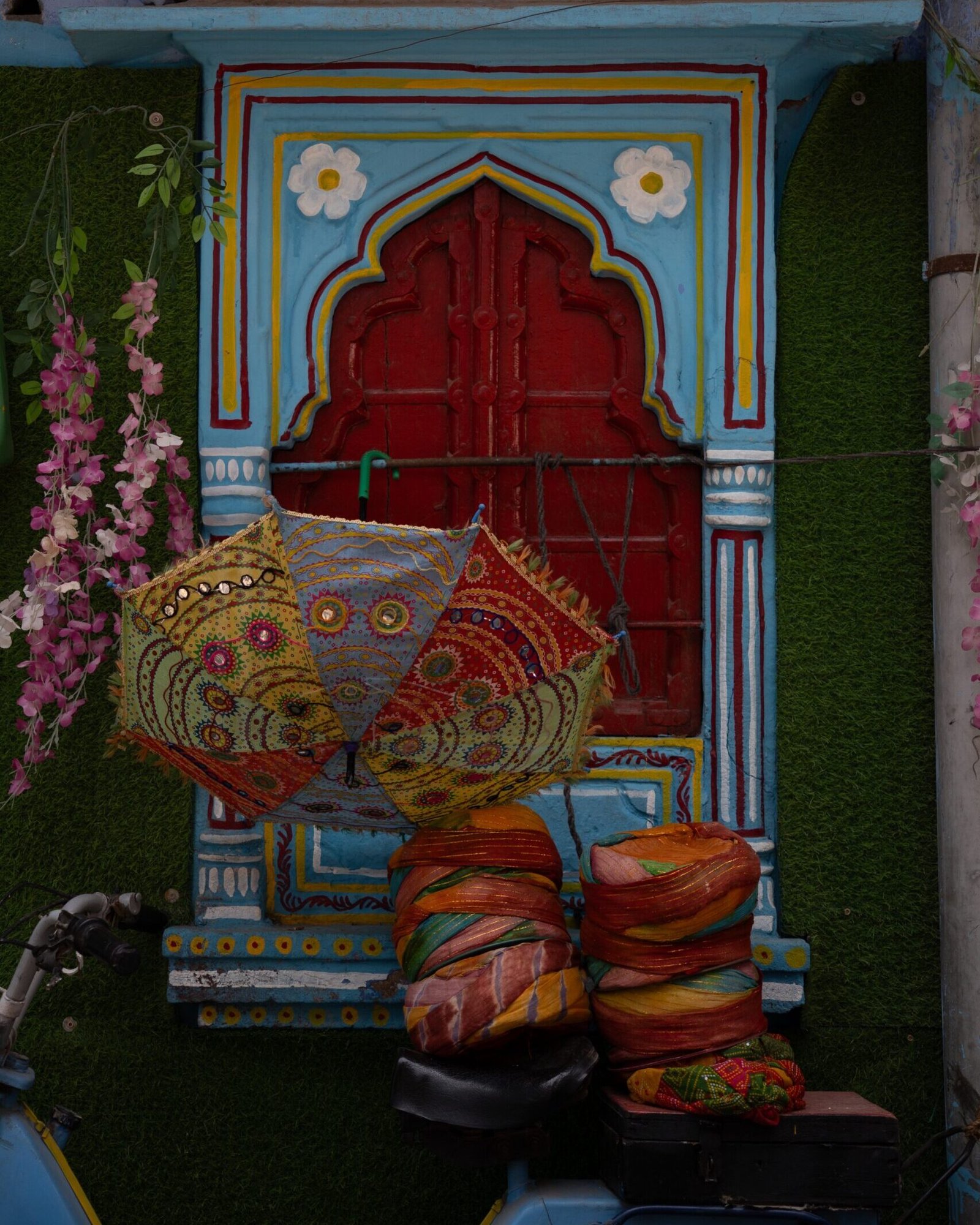
Photography Opportunities: Around the area you will find designated photo spots where you pay a local a small fee for use of an item or building as a backdrop.
Respect Private Property: Do not step into private spaces or peek through windows, always gain permission beforehand.
Drone Footage: Drones are heavily restricted in the Blue City due to the proximity to Mehrangarh Fort, government sites, and defense installations. If used, it will lead to confiscation or fines.
Final Thoughts
Whilst the Blue City is largely famous, it can be a little disappointing in my opinion. It’s extremely important that you go in with realistic expectations to avoid complete disappointment.
If you want to explore alone then use what I discovered to head to the best spots. However, if you want to visit with a guide then absolutely go for it – you’ll likely learn a thing or two more than going alone.
Don’t forget to check out my Complete Jodhpur Guide before taking your trip to the city.
Hi, I'm Kelly!
Welcome to The Untold Journeys, a travel blog with a focus on raw, authentic travels and finding those exciting hidden gems.
I’m here to share my experiences and stories to give you everything you need to explore the world and head on your own adventures.