Barefoot with 25,000 Rats: My Unfiltered Experience at Bikaner’s Karni Mata Temple

This post contains affiliate links, which means I may earn a commission if you make a booking, at no extra cost to you.

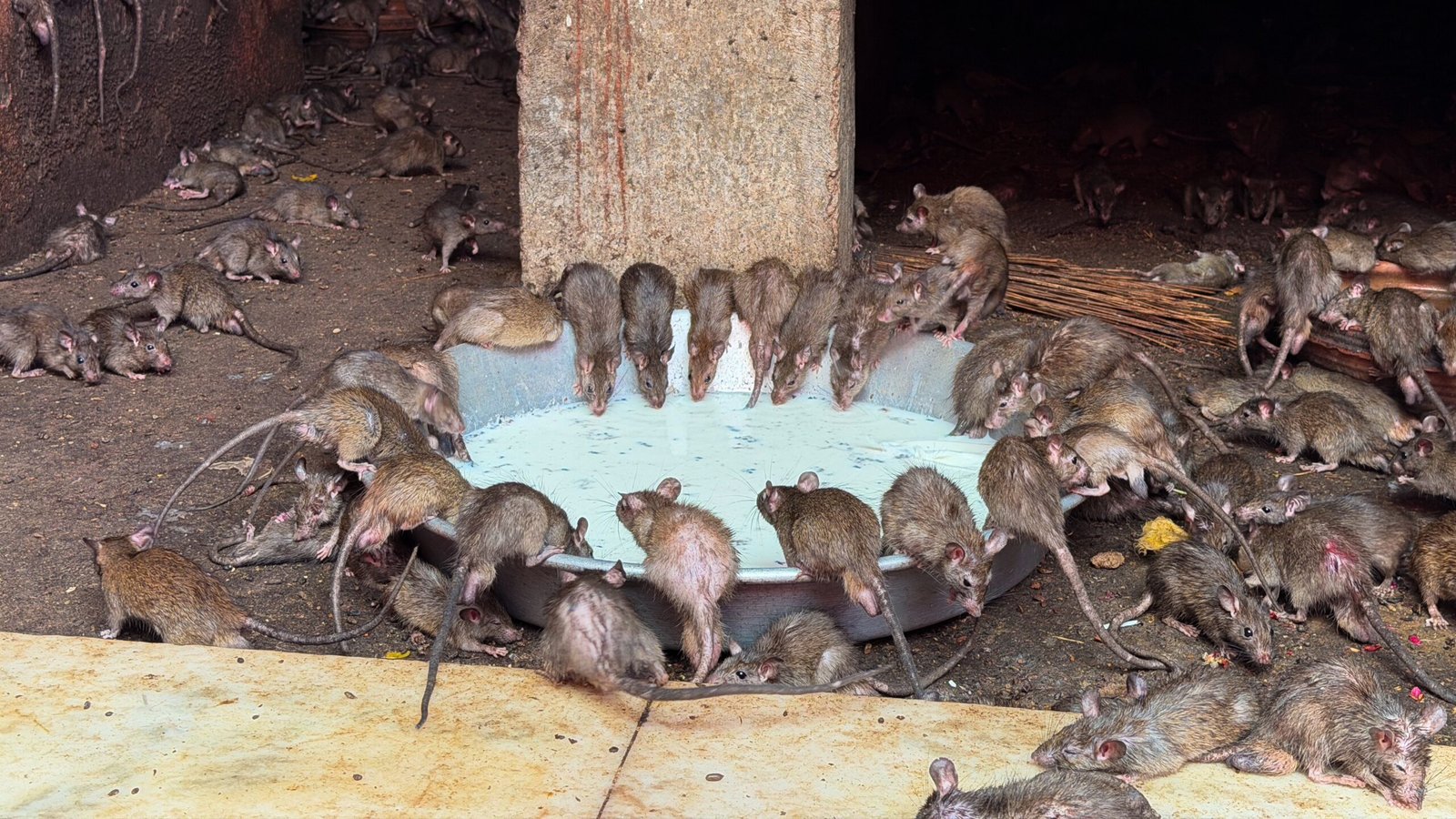
A lot of rats leaning over a bowl of milk inside of a Rat Temple - Karni Mata in Bikaner

The Rat Temple of Rajasthan truly is a temple like no other. Nothing will ever quite prepare you for the moment you step inside a temple where the floors are covered in little fluffy rodents scuttling around and the local people are worshipping them.

Located in the small town of Deshnoke, just 30 kilometres south of Bikaner, Rajasthan, this isn’t your typical tourist spot. It is one of India’s most sacred and unique religious sites which is home to around 25,000 black rats.

If you’re planning a trip to Bikaner or Rajasthan (or you’re just curious about this famous “Rat Temple), here is everything you need to know before visiting Karni Mata Temple.

History and Story of Kari Mata Temple

When you hear the term “Rat Temple”, it’s hard not to think that it’ll simply be an old temple full of rats like the ones that roam the cities and eat the rubbish. However, it’s much more than that and has an incredible history and story behind it. 

According to 14th-century legend, Karni Mata was a female Hindu sage believed to be an incarnation of Goddess Durga. Tragically, her stepson, Lakshman, drowned in a pond whilst drinking water from it. In an attempt to bring him, Karni Mata prayed to Yama, the God of Death.

Instead of bringing the boy back, Yama made it so Lakshman and all of Karni Mata’s male descendants would be reincarnated as rats inside the temple complex until they could be reincarnated as humans.

Today, worshipers don’t see pests among the temple floors but instead they see their family. 

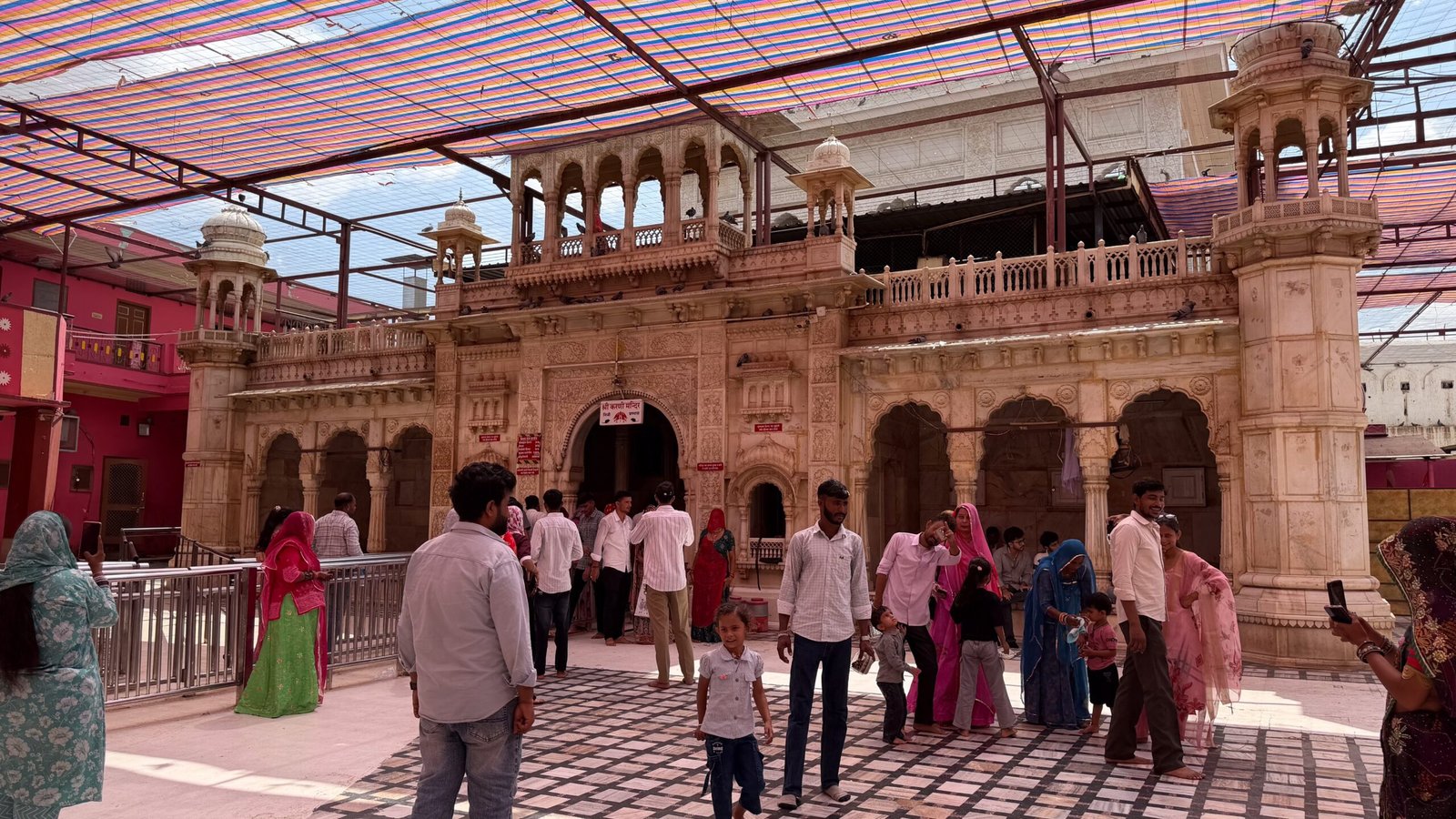
The outside of the main section of the Rat Temple
The main open area at the Rat Temple

Watch Out: Among the estimated 25,000 black rats, there is a small number of rare white rats. Spotting a white rat is considered extreme good luck and a personal blessing from Karni Mata herself. During my visit, I was extremely lucky as I spotted a white rat behind a door, amongst the black rats. Everyone came rushing over, pushing through to get a look and a sign of good luck. 

What to Expect at Kari Mata Temple

As you step through the huge metal, silver gates, you’ll enter into an open marble courtyard which is decorated with traditional Rajasthani architecture. Immediately you’ll spot furry bodies and long tails of the rats and honestly, it can feel overwhelming and a little scary. 

Once you continue through in a clockwise movement, which is typical of Hindu temples, you’ll have to avoid stepping on any small friends below your feet as the spaces become tighter meaning a higher concentration of rats.

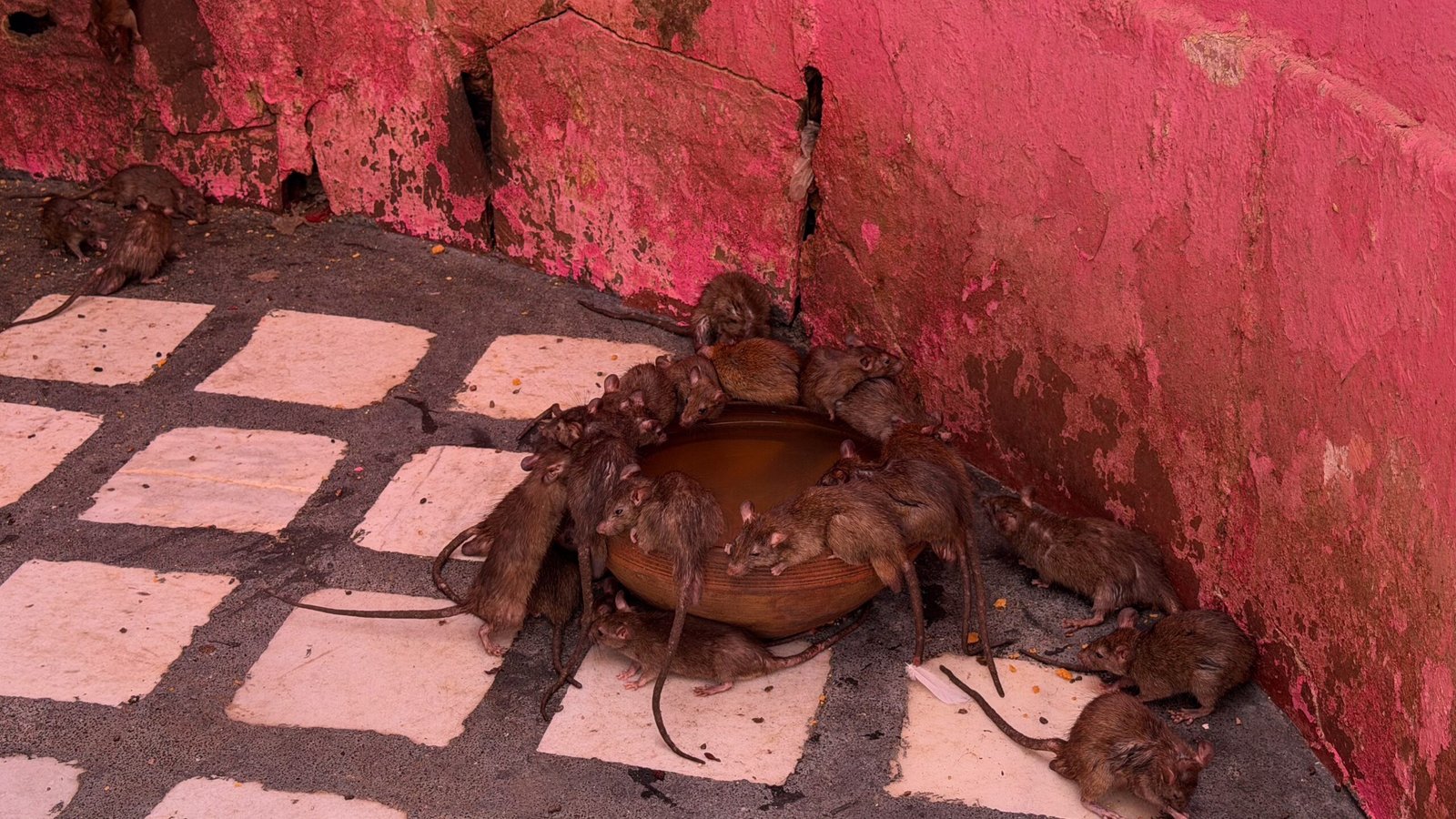
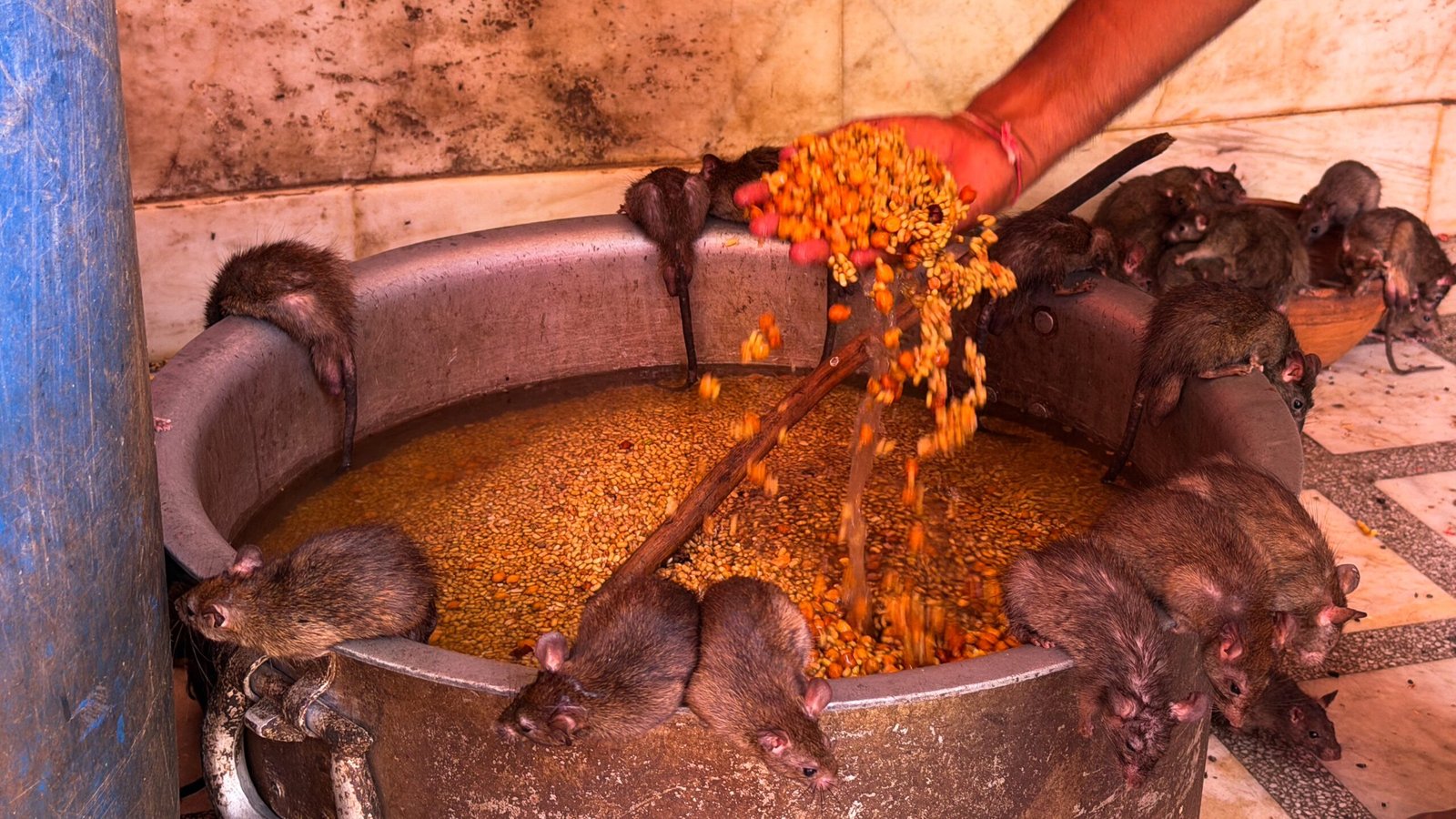
Following the path to Garbhagriha (the main inner sanctum), you’ll pass by large brass bowls of offerings given to the rats, which usually consist of things like grains or milk. Devotees may also sit amongst the rats to eat their meals peacefully.

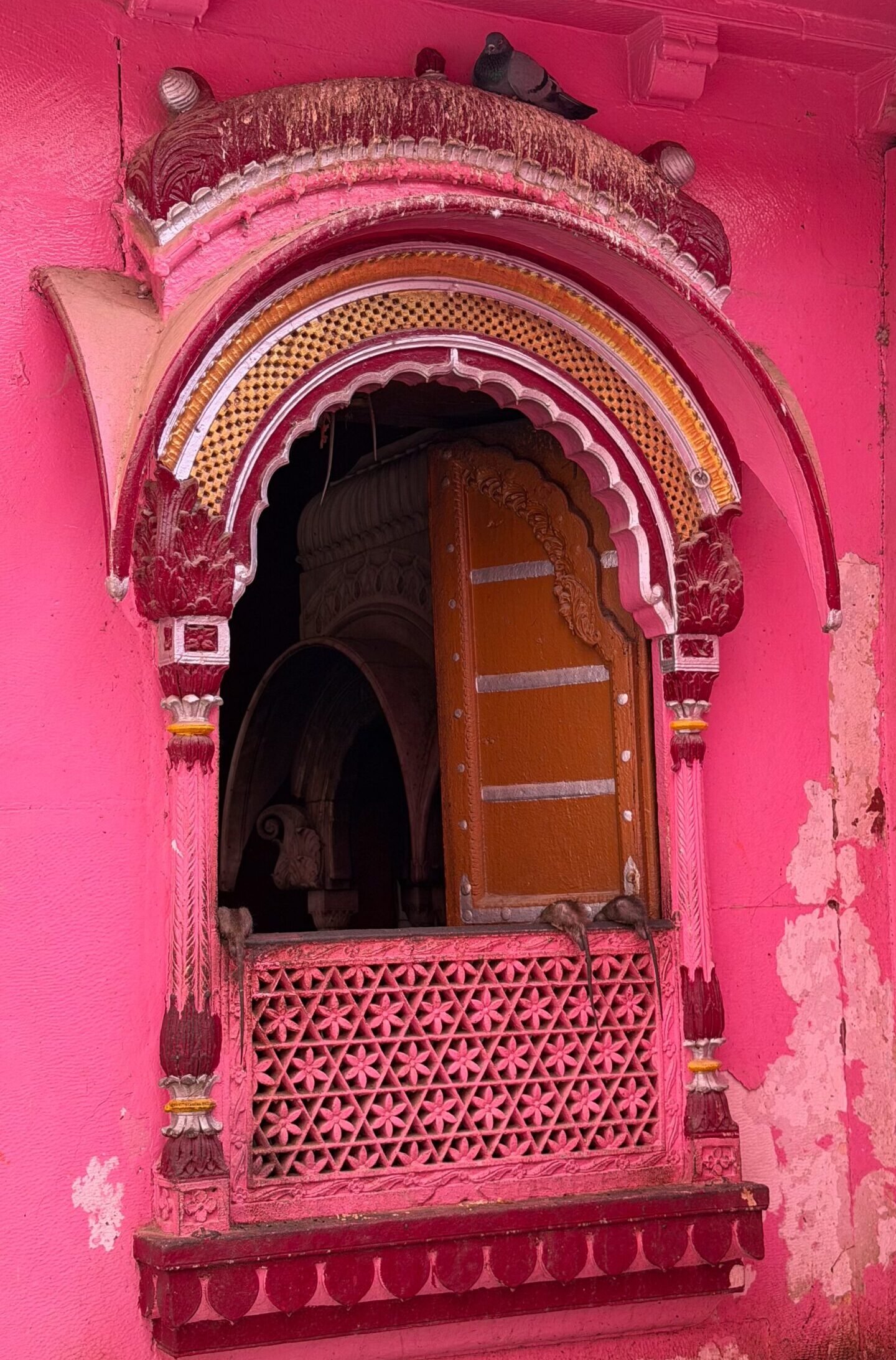
A pink window with traditional Rajasthani architecture
A very bright external pink window

Ethical and Hygiene Reality Check

Before visiting, a lot of tourists will ask the question “Is it dirty, and will I get sick?”. It’s a fair question, but I’ll explain why you’ll be just fine. 

Even though the temple is home to nearly 25,000 rats, there has been no recorded history of plague or disease tracing back to here. This is due to many reasons: the rats aren’t sewer rats, they live exclusively within the walls of the temple and they are fed a controlled, healthy diet of milk, grain and sweets.

Whilst I absolutely wouldn’t recommend for you to do this, a local actually demonstrated this to us during our visit: he cupped his hands and drank the water directly from the bowl where the rats are drinking. This is common practice for pilgrims and worshippers as they believe it’s a sacred blessing to share food and drinks with the rats. 

A lot of rats around a bowl of water
One of many bowls with rats enjoying the contents

Hygiene Tips:

  • Wear Socks: Footwear is to be left outside the temple but socks are permitted. Opt for thick socks or two pairs. I personally wore two pairs and took the top pair off immediately after stepping outside the gates. 
  • Hand Sanitiser: Carry a small bottle in your bag and be sure to use it after your visit, even if you didn’t touch anything. 
  • Watch Your Step: Aside from stepping on the actual rats, you’ll want to avoid any droppings on the ground or food that may have been spilled. 
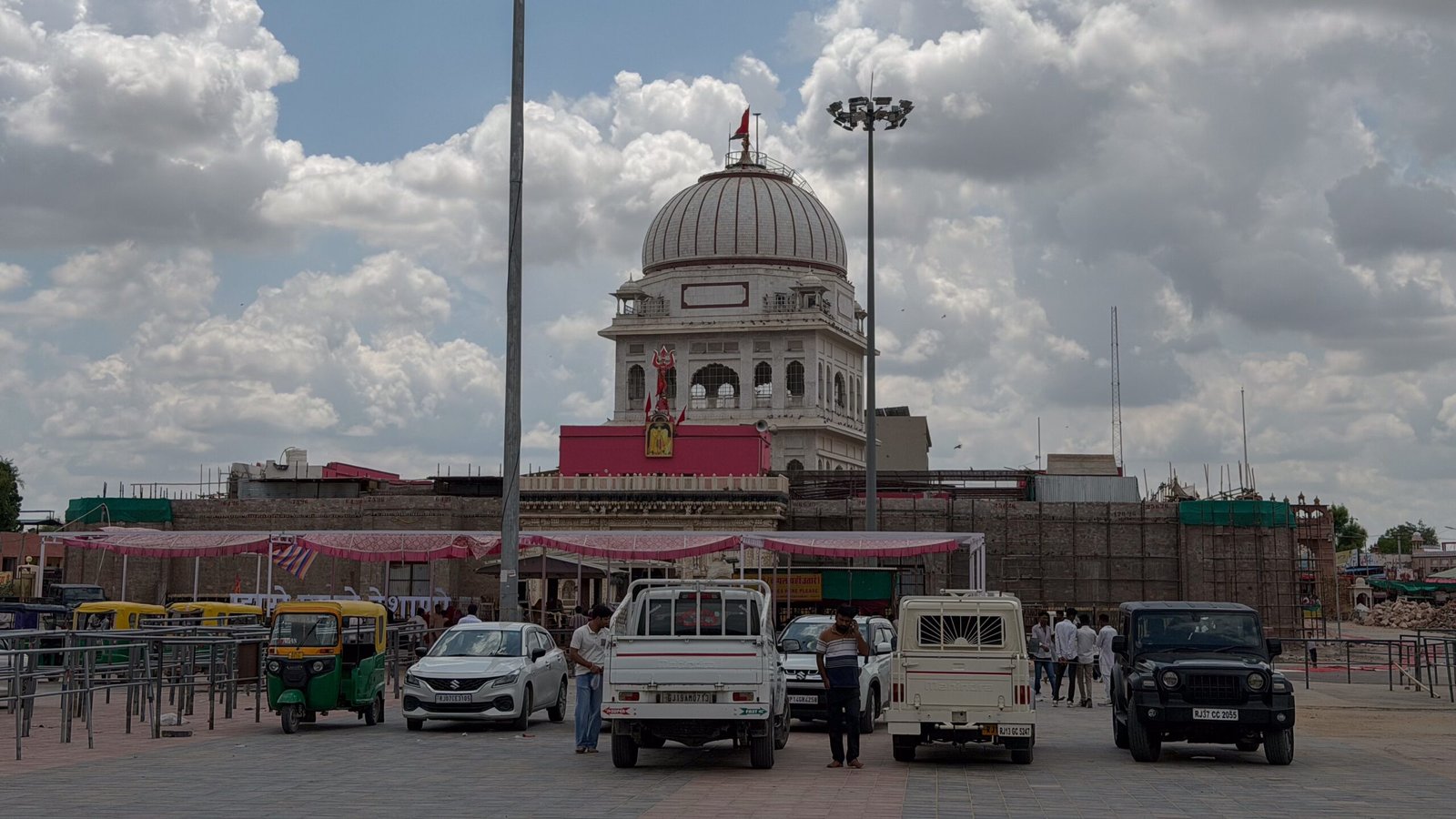
The outside of the Karni Mata Temple with cars parked up
The outside of the temple from the main car park

Ethical Considerations:

As a Western tourist, this was an absolutely wild experience and one I personally was extremely worried about. I am not a rat fan. 

However, to get the most out of the experience here, you simply have to shift your perspective. Within this temple, devotees believe that the rats are living, breathing manifestations of their ancestors who have been protected with devotion and love.

The best way to approach your visit here is with open curiosity rather than disgust. Even if you don’t understand, you can see the strong, spiritual meaning that this temple holds for those who are visiting which makes it a unique and valuable visit. 

A man putting his hand into a bowl of food with rats around the edge
A local temple devotee showing us the offering that was given to the rats

Practical Visitors Guide: Everything You Need to Know

How to Get There

Deshnoke is around 30km south of Bikaner. The most convenient way to get to the temple but also the most expensive is by taxi or auto for a round-trip. You’ll have to negotiate a price and ensure wait time is included. Alternatively, both Bikaner and Deshnoke have train stations which run regular trains between the two for less than $10. The most budget option of all, but possibly the most unenjoyable is by local bus.

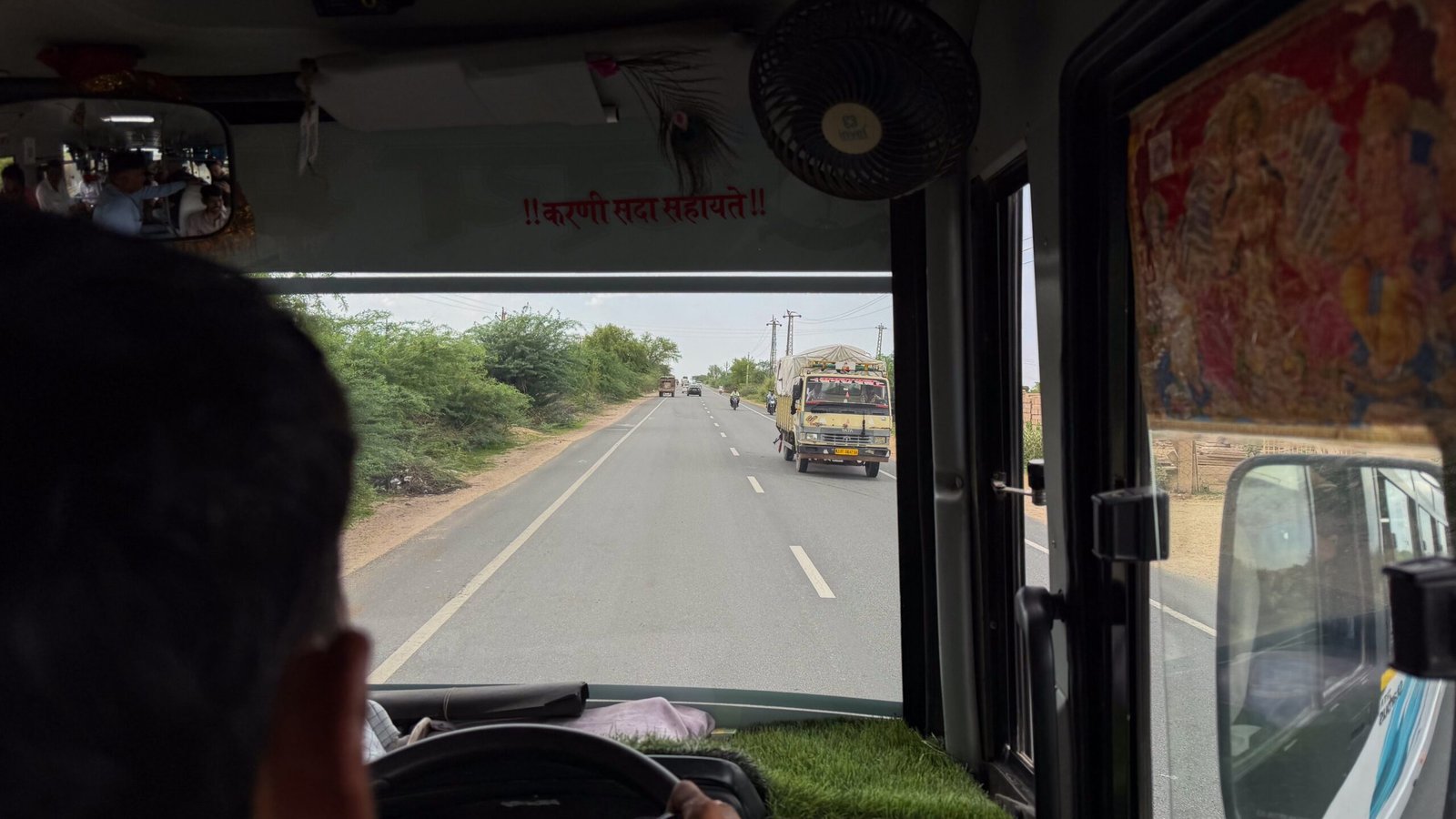
As a true budget traveller, I couldn’t turn down a money saving opportunity like this so opted for the local bus which cost 40INR ($0.42). They run regularly between the two places and conveniently stops and starts right outside of the temple. Be aware that they’re non-AC and crowded so they’re not always the most comfortable rides. 

A view out the front of a bus driving on a main road
The prime front seat I got right behind the driver on the bus

Best Time to Visit

If you visit during the day, like I did, you’ll find that most of the rats are resting. Big groups of them sleeping or casually drinking or eating. For a more chaotic, energetic visit, opt for early morning or early evening. This is when the rats are most active and running around. 

Clothing Rules

Whilst the temple doesn’t explicitly state any clothing rules, it’s visited by more than 99.9% locals and domestic tourists who typically where conservative clothing so signage isn’t needed. That said, follow their lead and typical temple etiquette by covering your shoulders and knees. 

Footwear Rules

As mentioned before, footwear is to be left outside of the temple. Most visitors will just leave their shoes anywhere but there is a designated shoe holder with someone manning. In terms of price, we were told that it was a free service and the man on the desk said it was “as you like” – feel free to give a small tip if you would like. The majority of locals walk inside the temple barefoot however I really wouldn’t recommend this as there’s nowhere to wash your feet after. Bring a pair of socks (or two). 

Photography Rules

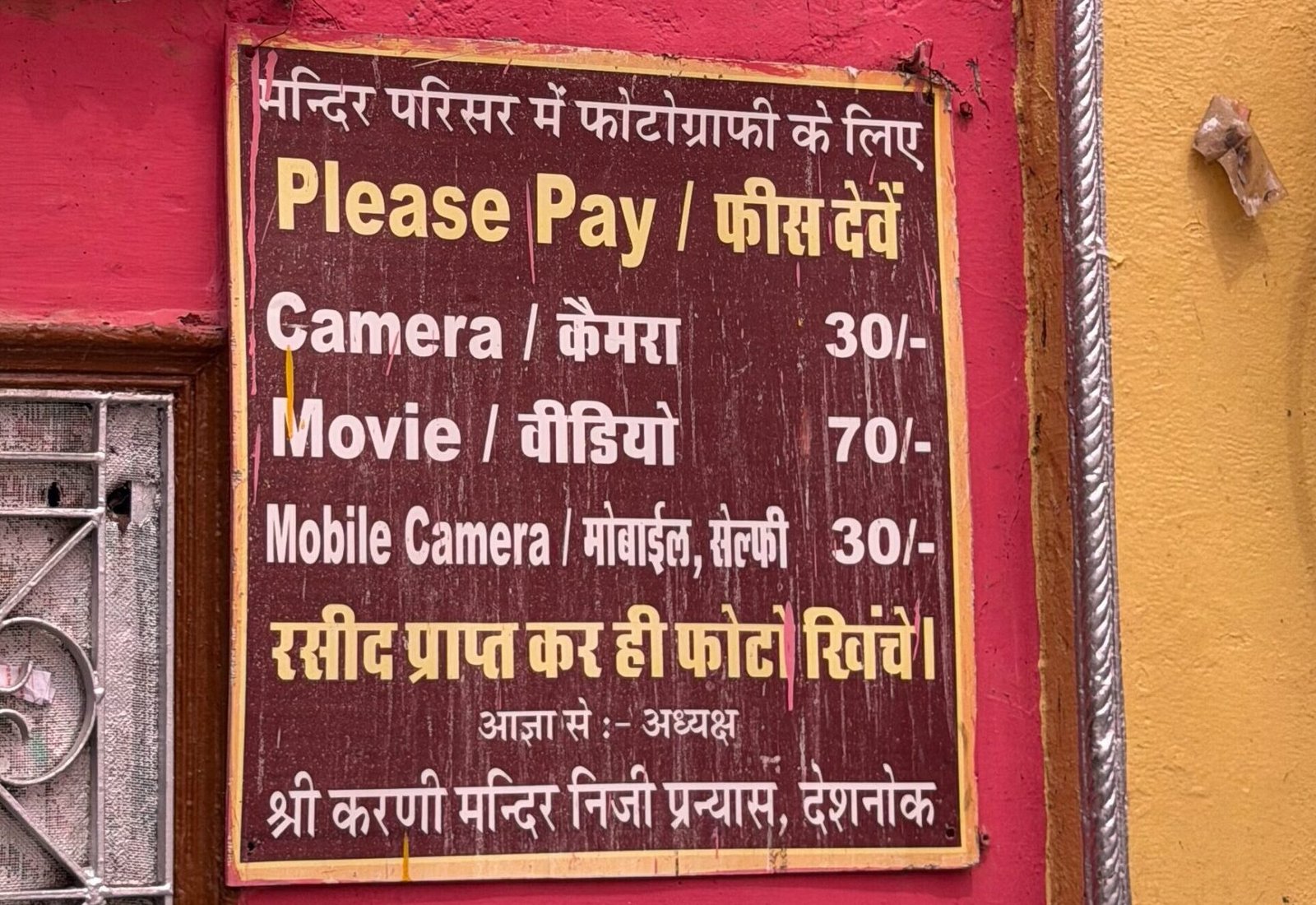
Photography inside the temple is allowed for a small fee. Taking photos using a phone or camera is 30INR ($0.31) and using a video camera is 70INR ($0.73). For anyone heading to the temple to shoot professional content for work – even vloggers, there is a higher fee of 1100INR ($11.50). A local man will also assist you in explaining things and guiding you through the temple if you desire – he appreciates a tip too. 

A sign inside the Rat Temple displaying prices for taking photos
The display of photography fees inside the Rat Temple

As a visit to the Rat Temple is only a half-day activity, you’ll have plenty more time to explore more of Bikaner. Here’s some top suggestions of what to do back in the city: 

Explore Junagarh Fort: Unlike most of Rajasthan’s forts which are built on high hills, this one is located right in the city centre. At over 500 years old, it has some of the most intricate details and marble courtyards in Rajasthan. 

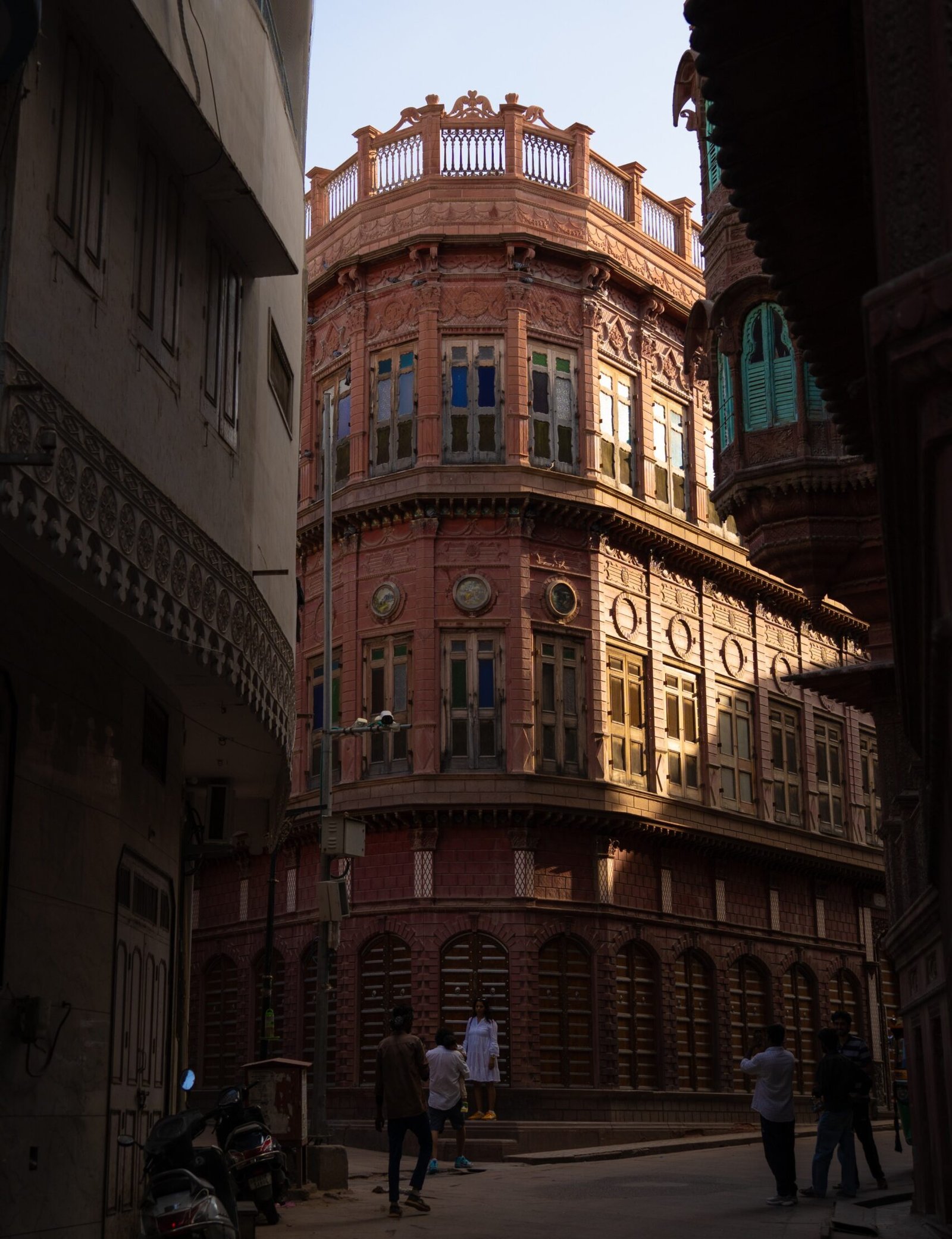
Wander the Rampuria Havelis: Inside of Bikaner’s Old City, you’ll find grand, red-sandstone merchant mansions. The architectural detail and carved wooden doorways make for incredible photos – especially during late afternoon light. 

Visit the ICAR-National Research Centre on Camel: Located on the outside of Bikaner, this is the only camel breeding farm in Asia. They look after endangered species and even make camel milk ice cream. 

A haveli in Bikaner glowing in the sunset gold lighting
The gorgeous havelis glowing in the late afternoon sun

Is a Visit to Karni Mata Worth It?

Visiting Karni Mata Tempe is a wild, truly unforgettable experience that forces you to step out of your comfort zone. A place that sounds terrifying on paper will quickly turn into a fascinating lesson in perspective, faith and how different cultures view animals.

If you’re heading to Rajasthan, consider heading to Bikaner and taking a trip over to the Rat Temple.

Blog Posts

The Blue City is one of Rajasthan’s most iconic destinations. This complete 3-day Jodhpur guide covers everything you need to know before heading on your own adventure.

If you want to watch the sun set over the Old City, or walk along an ancient stone wall, this guide breaks down Jaipur’s best viewpoints - complete with tips, costs and more.

Having spent almost a week exploring the Golden City, I’ve put together this complete Jaisalmer accommodation guide which covers the pros and cons, environmental impacts and practical tips to help you decide what’s right for your trip.

Scroll to Top